
By:
Lt Gen (R) Sardar Hasan Azhar Hayat
MD Pakistan Land Port Authority
Ex. MD Green Tourism Pvt. Ltd
I have never been so confused while writing a travelogue as I have been about Vienna. The reason is simple: I do not want to bore you, yet there is so much character, history and beauty in this city that it is difficult to decide what to leave out.
This is not my first visit to Vienna. A little over a year ago, I travelled here while hitchhiking across Europe. I have also visited the beautiful Austrian town of Innsbruck, nestled in the Alps. This is therefore my third visit to Austria, and each time I discover something new.
My latest visit was primarily to attend an international migration conference, but I also managed to find time to explore more of this remarkable city.
Why Vienna? It has history, art, music, archaeology and outdoor activities, all of which fascinate me. Perhaps I simply have a special liking for what Vienna represents!
More than its socialist Red Vienna era or its present democratic system, based on federalism and empowered local governments, I am fascinated by the Holy Roman Empire, the Austro-Hungarian Empire and its monarchs. Vienna has played a remarkable role in European history and continues to be an important international centre, hosting organisations such as OPEC, OSCE and ICMPD.
Austria has a population of approximately 9 million, while Vienna has around 2 million inhabitants. The country faces demographic challenges, with discussions around first-born and second-born children, immigration and the balance between attracting people and managing population needs. Interestingly, Austria’s economy has grown enormously, with GDP approaching USD 600 billion.
This brings me to an important thought: Pakistan must also reflect on population management and the importance of creating smaller, empowered administrative units for effective governance.
Landing anywhere in Europe during winter can be a gloomy experience, particularly for someone arriving from Pakistan. Cloudy skies, cold weather, fewer people on the streets and an overwhelming dependence on digital services create a feeling of isolation. Coming from Pakistan’s lively atmosphere, one cannot help noticing the contrast.
I travelled from my village to the airport in Pakistan, and it seemed that even my cook was ready to accompany me! We certainly have plenty of people and activity around us, something I actually appreciate about Pakistan.
Our flight had arrived from Istanbul, and I remember seeing nearly a thousand people lined up to receive a flight at the airport. Such scenes are quite unimaginable in Europe.
We travelled by vehicle, crossing the River Danube, on whose banks Vienna stands. As we left the suburbs and entered the First District, the historic heart of the city, its architectural beauty and cultural heritage became increasingly impressive. Almost every building seemed worthy of a photograph.
Our hotel was a vintage establishment dating back to the 1850s, located in the middle of the First District. European hotels have their own boutique character. They may not always offer the extravagance of Middle Eastern or Southeast Asian hotels, but their charm lies in their history and cultural identity.
I needed laundry and ironing facilities before my conference. The hotel informed me that laundry was unavailable and that an iron could only be used near reception, not in the room. There was no bottled water either, although Vienna’s excellent tap water comes from Alpine springs through the Vienna Woods. We Pakistanis are certainly accustomed to a different level of hotel service!
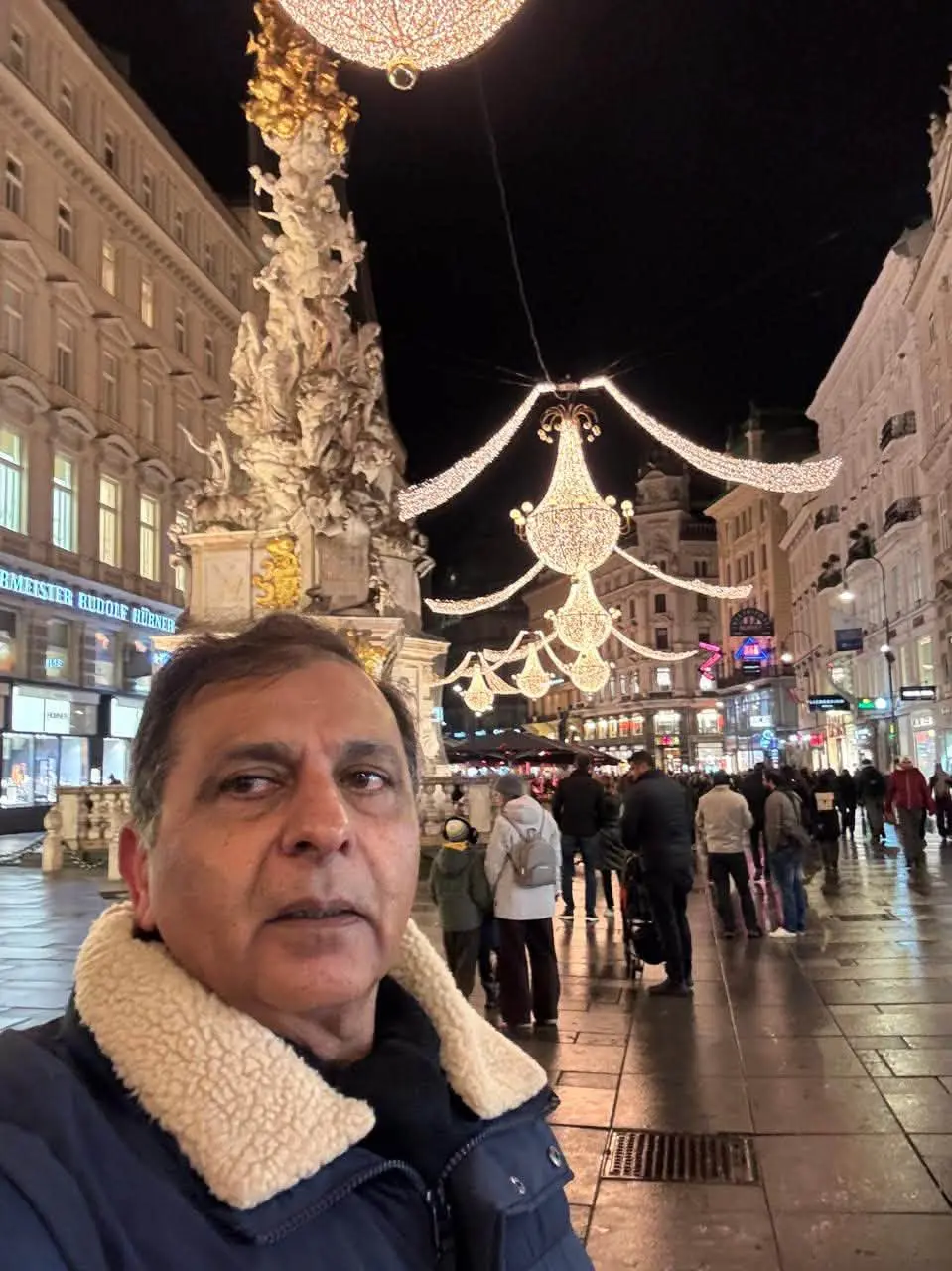
Vienna was already preparing for Christmas. Streets were illuminated with beautiful decorations, and Christmas markets were appearing throughout the city. The longer I stayed, the more festive lights I noticed.
The city receives approximately 17 million tourists annually. Shopping streets are lined with international brands, restaurants and traditional Viennese coffee houses. Although halal food is available, choices are relatively limited. I managed to enjoy some potatoes prepared in a desi style at one of the Christmas stalls.
Vienna is expensive, particularly when it comes to shopping and sightseeing. Nevertheless, I managed to add another ashtray to my collection, an unusual hobby that I maintain while travelling.
The next two days were devoted mainly to my international migration conference, along with a little shopping.
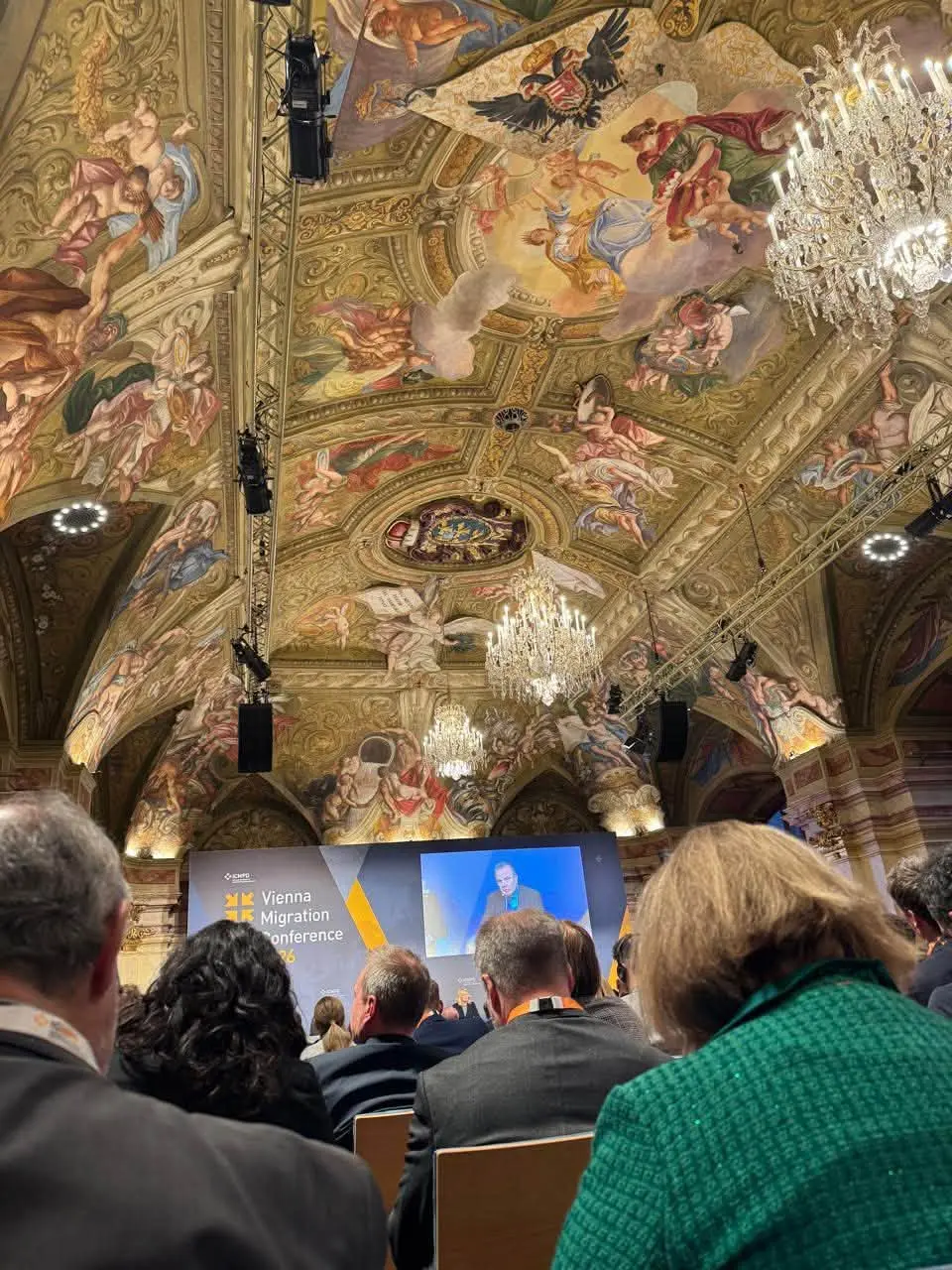
The conference venue was Palais Niederösterreich, a magnificent historic building dating back to 1513. Constructed in Gothic style, it is particularly famous for its impressive hall and ceiling fresco, completed around 1780. Today, the palace is used for important events and conferences. Even Mozart is associated with performances at this historic venue.
The building itself was an experience, reflecting the grandeur of Vienna’s imperial past.
I had one weekend day available for sightseeing. Initially, I considered visiting Laxenburg, a beautiful place outside Vienna, but the weather forecast predicted heavy rain.
After breakfast, I stepped outside to find the rain pouring heavily. I therefore decided to take the Big Bus hop-on-hop-off tour, which offered two routes covering most of the city’s important attractions.
Its story stretches back more than 2,000 years, beginning with Celtic settlements and Roman frontier establishments along the Danube during the first century AD.
In 1115, Henry II established Vienna as the residence of the Babenberg dynasty. By the late 13th century, the Habsburgs had gained control, ruling the city from 1278 until 1918. Their influence remains visible in Vienna’s architecture, palaces, gardens and cultural institutions.
The 16th and 17th centuries witnessed two Ottoman sieges of Vienna. Despite these challenges, the city resisted and subsequently flourished. Baroque architecture, music and artistic traditions developed during this period.
The Congress of Vienna in 1814–1815 reshaped the political map of Europe. The end of the First World War brought the collapse of the Austro-Hungarian Empire. This was followed by Red Vienna under socialist administration, Nazi occupation and eventually the establishment of modern Austria after the Second World War.
Vienna has therefore experienced several political transformations, including periods of foreign occupation and major changes in governance. Its present prosperity reflects a long journey through history.
My sightseeing began with a beautiful walk through the old city towards the Vienna State Opera, the starting point of the Big Bus tour.
Early mornings in Vienna are particularly beautiful. With shops closed, fewer people on the streets and Christmas lights still glowing, the city looks almost magical.
The Vienna State Opera, completed in 1869, is one of the world’s most celebrated opera houses. It suffered damage during the Second World War and reopened in 1955 after reconstruction.
For music lovers, Vienna is undoubtedly a dream destination. I was reminded of my good friend Tufail Khan, who introduced me to the world of opera and symphonies.
I had hoped to attend a performance but unfortunately could not manage it because of my schedule. Having spent three years in Beijing, where I regularly attended annual opera performances, I understand how mesmerising this art form can be.
Even Vienna’s street musicians are remarkably talented. The city has produced some of the greatest names in classical music, including Beethoven, Mozart, Haydn, Schubert and the Strauss family. The Habsburg rulers played an important role in encouraging music and supporting artists.
Opposite the Opera House stands Albertina Palace, formerly associated with the Habsburg royal family and now an important museum. It even has a tunnel connecting it to the Opera House, reportedly allowing members of the royal family to attend performances discreetly.
I boarded the Big Bus shortly after 9 am, selecting the Blue Route because it covered Schönbrunn Palace, one of Vienna’s most famous attractions and a UNESCO World Heritage Site.
The bus tour was an excellent experience. Its audio commentary, accompanied by classical music, made the journey particularly enjoyable. Sitting on the upper deck offered wonderful views of the city.
One of the interesting features of Vienna is its urban planning. The old Vienna Canal and other water channels were developed to support the city’s water requirements and help manage flooding from the Danube.
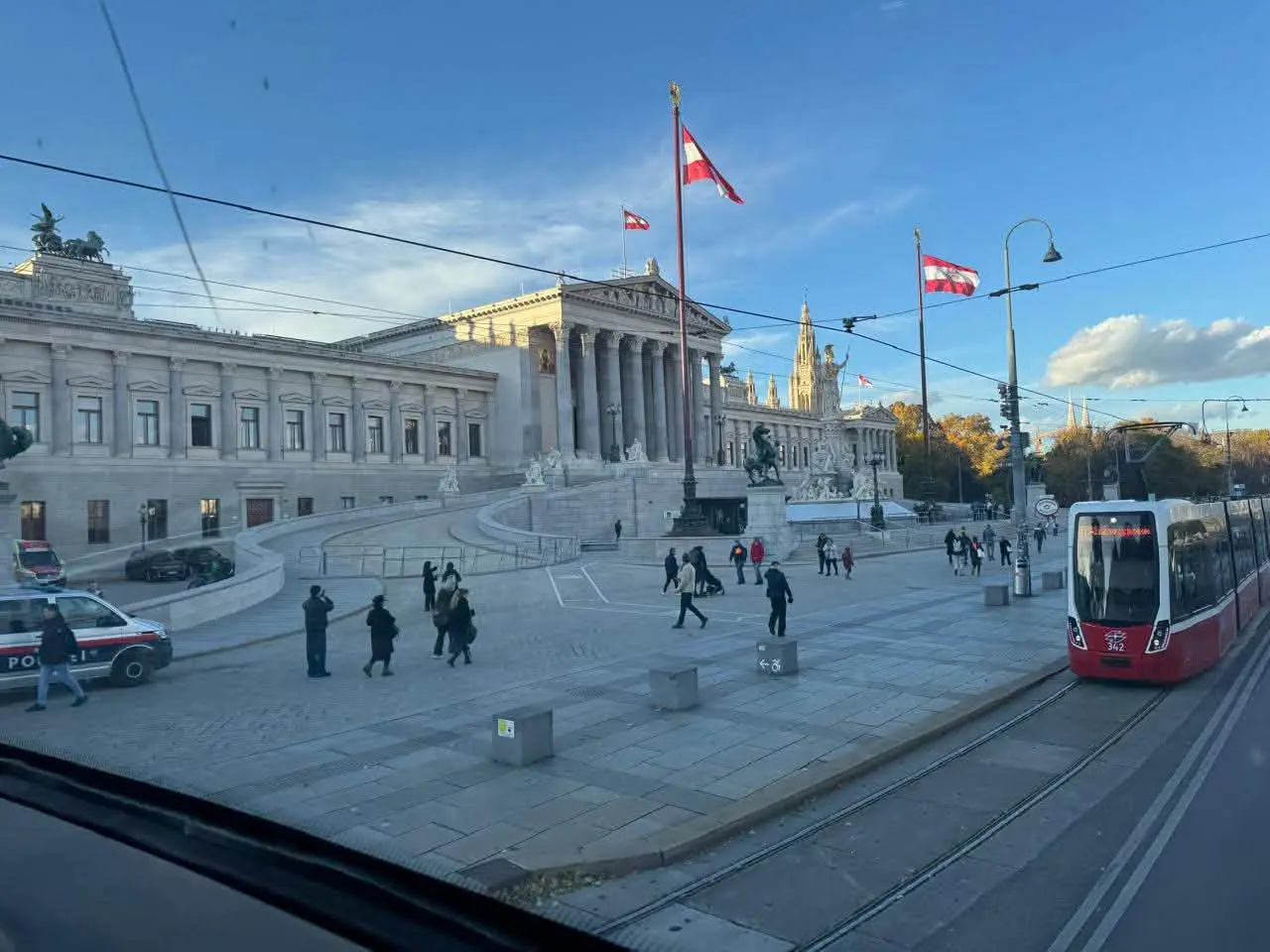
As we travelled towards the outskirts, the city gradually gave way to greenery. Vienna’s public transport system is equally impressive, with trams connecting different parts of the city efficiently.
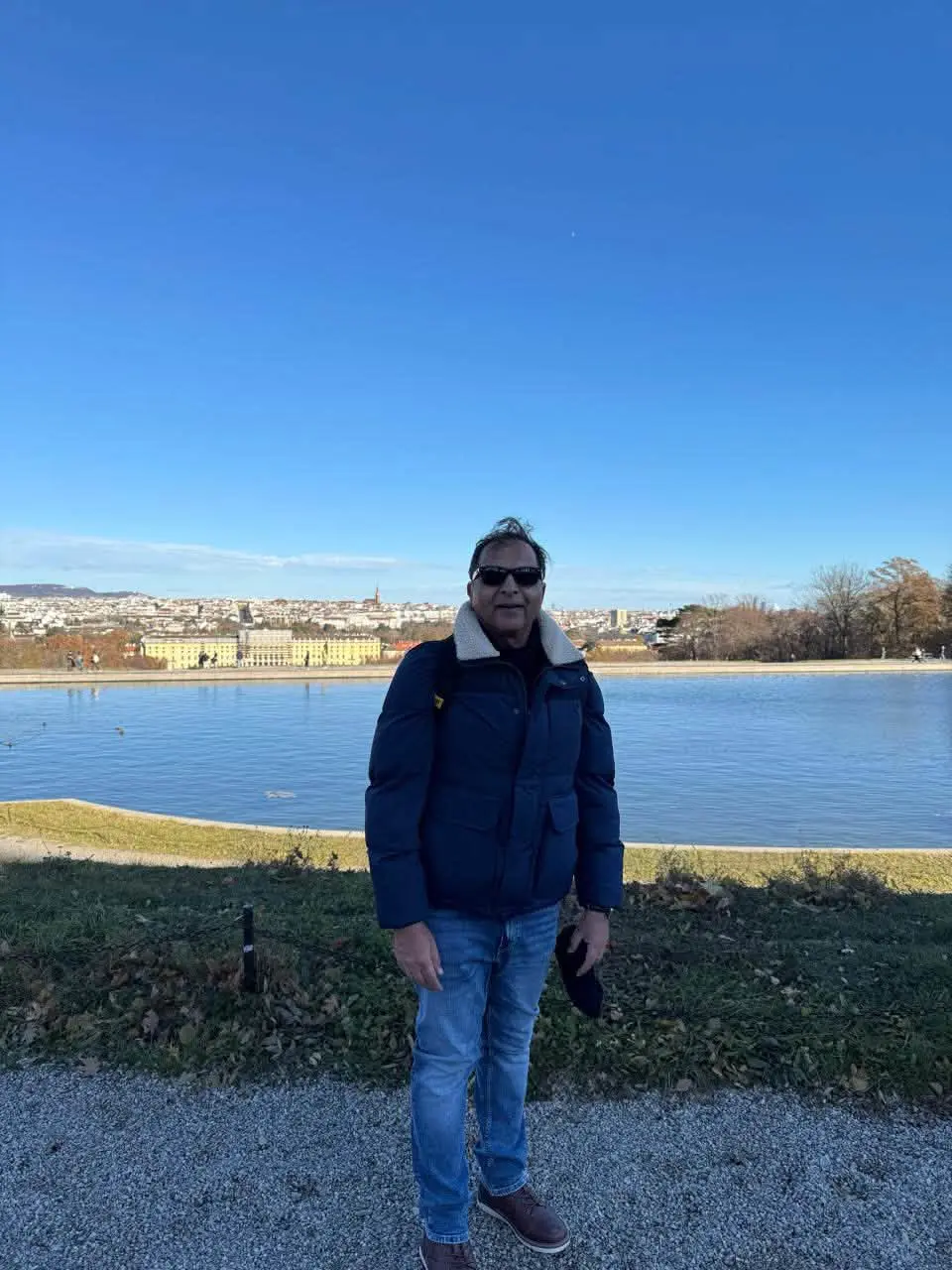
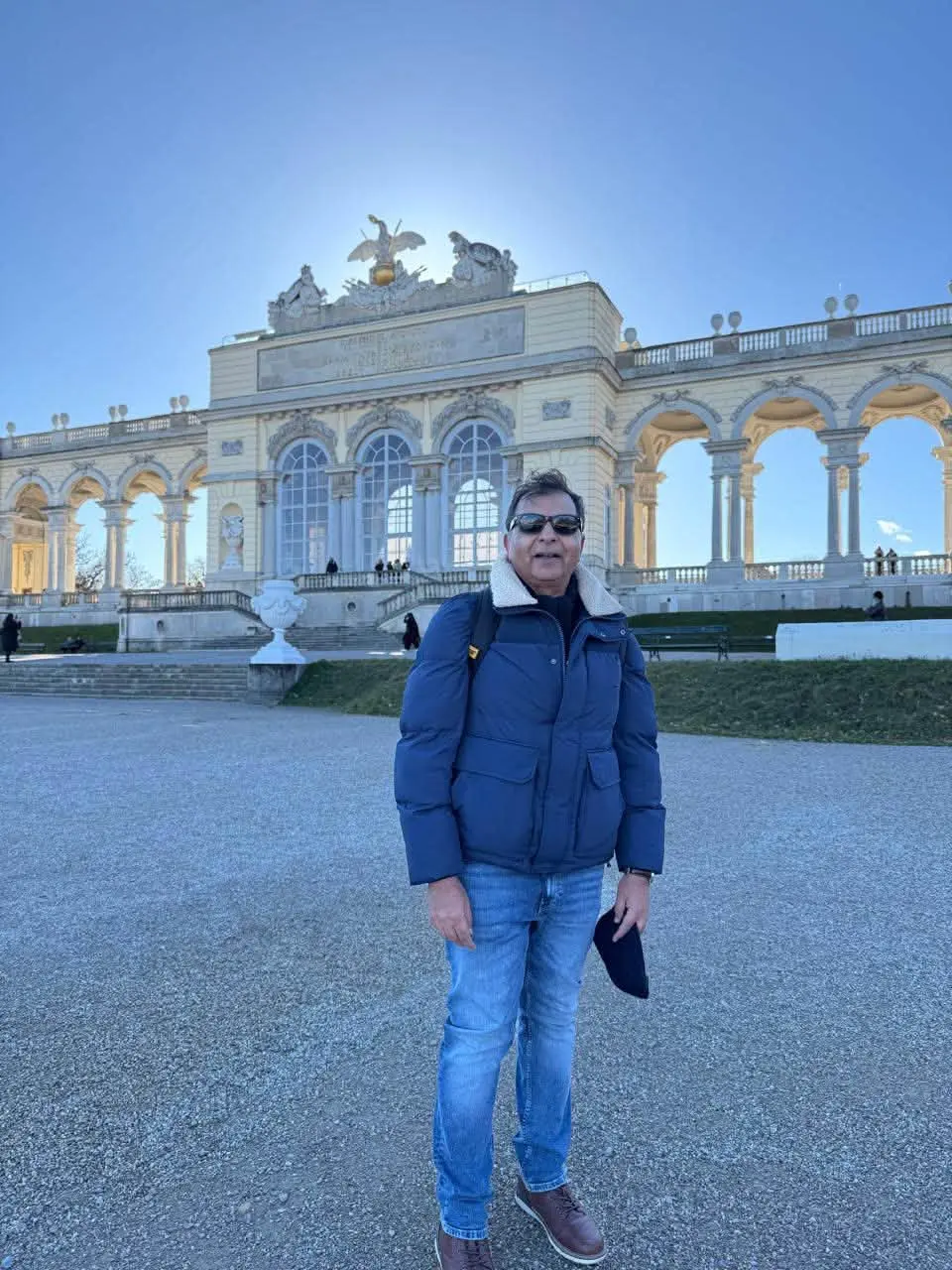
The magnificent entrance welcomed visitors with a clear blue sky and strong winds. Christmas stalls were already being arranged, and the palace grounds looked particularly beautiful.
Having visited the palace previously, I decided to explore its French gardens, which I had missed on my earlier trip.
The gardens were magnificent, with carefully designed pathways, sculptures, greenery and peaceful corners. In some places, they resembled a natural forest. I even managed to lose my way while exploring them!
There were people jogging, others relaxing and teachers accompanying groups of young pupils. The palace also houses a famous zoo.
One particularly impressive structure was the Old Palm House, built in 1822. It is a massive greenhouse containing a variety of plants and remains an important part of the palace gardens.
Schönbrunn has an extraordinary history. Emperor Maximilian II initially used the area as a hunting reserve. Later, the Habsburgs transformed it into a magnificent palace, with major construction and expansion during the 17th and 18th centuries.
The palace has more than 1,400 rooms, although only a selection is open to visitors. Its architecture is predominantly Baroque, reflecting the wealth and artistic preferences of the imperial family.
The palace grounds extend across hundreds of acres and include magnificent French gardens, fountains and sculptures.
I climbed towards the hill overlooking the palace, where the Neptune Fountain and the Gloriette provide spectacular views of Vienna. The Gloriette, standing on elevated ground, is now home to a café.
The palace is also associated with numerous historical personalities, including Emperor Joseph II and Empress Elisabeth, popularly known as Sisi.
It has appeared in several films and television productions, adding to its international appeal.
I spent more than two hours exploring the gardens and surrounding areas. This visit was particularly rewarding because I could appreciate the botanical and landscape architecture that I had missed previously.
My next destination was Belvedere Palace, situated in Vienna’s Third District.
The palace was strongly recommended by my daughter-in-law, and I was determined not to miss it.
Belvedere consists of two principal buildings, the Upper and Lower Belvedere, connected by magnificent French-style Baroque gardens.
It was originally built as the summer residence of Prince Eugene of Savoy, with construction completed in the early 18th century. Following his death, the property passed through various royal hands.
Today, the Upper Belvedere houses one of the world’s most celebrated art collections.
I purchased an entrance ticket for approximately 20 euros, taking advantage of a Christmas offer.
This also reminded me of how poorly we value our own heritage in Pakistan. For instance, the entrance fee at Taxila Museum is remarkably low for local visitors, while the Wah Mughal Garden also charges a nominal amount. We need to reconsider how we preserve, present and economically sustain our historical attractions.
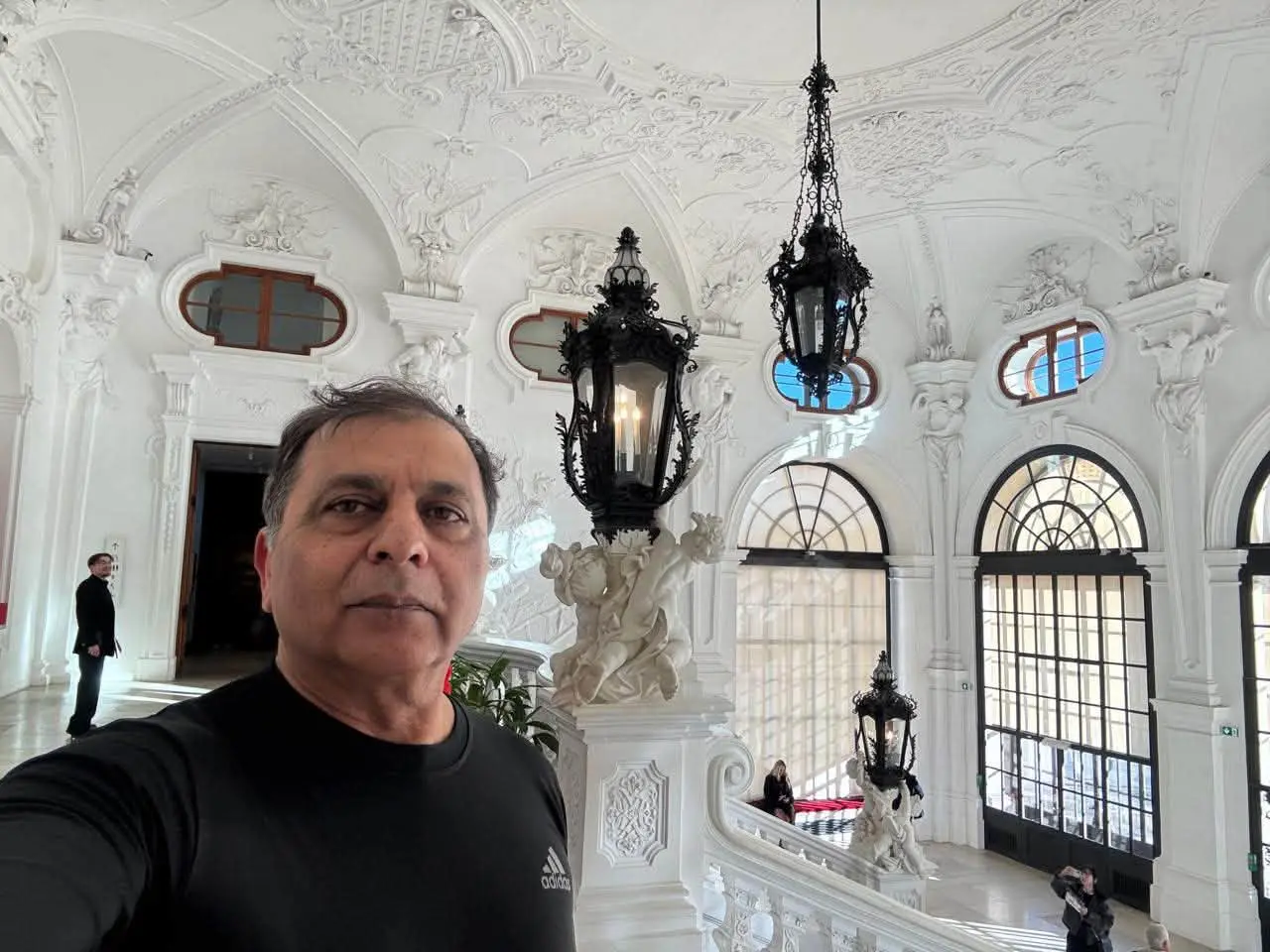
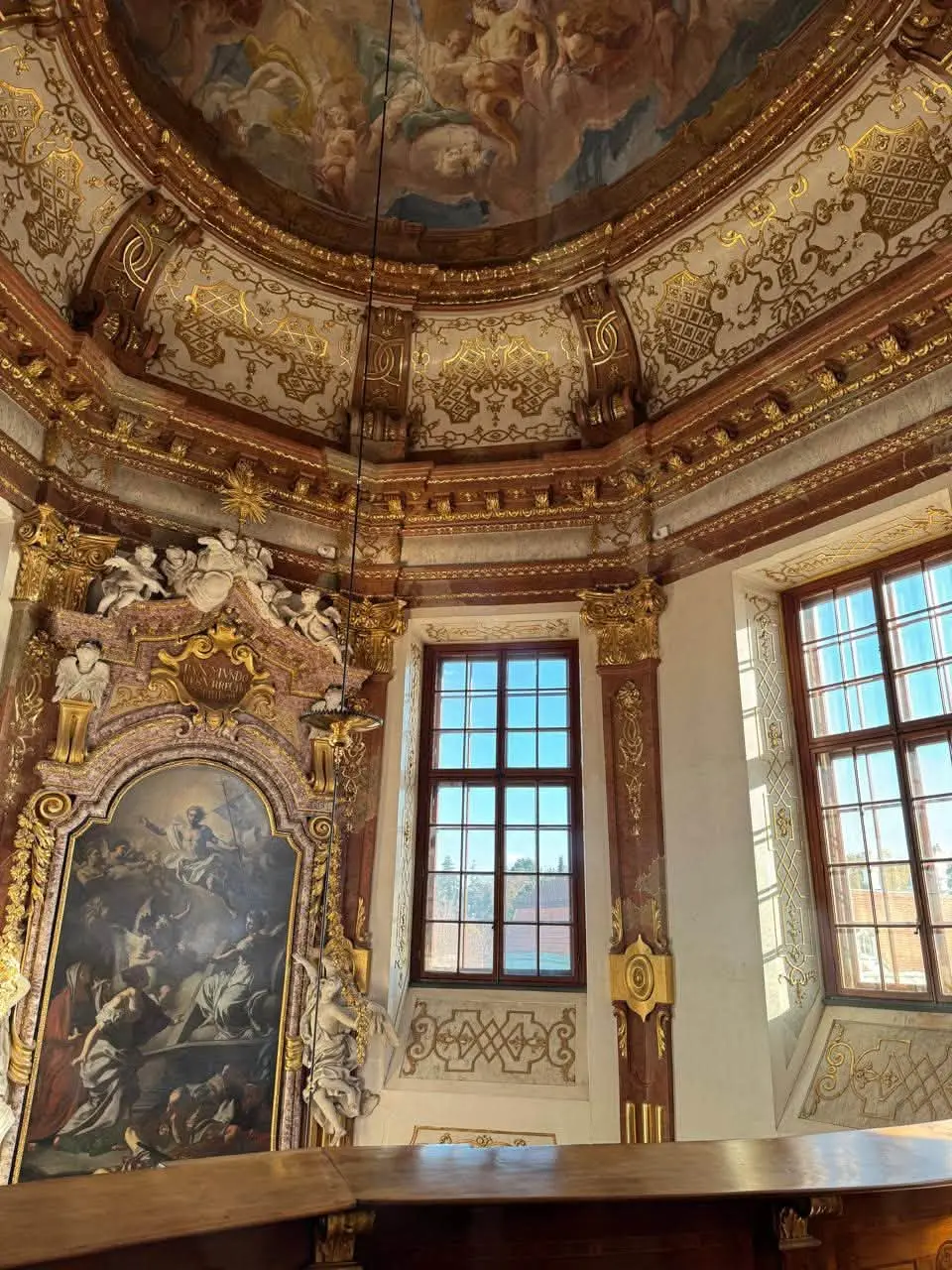
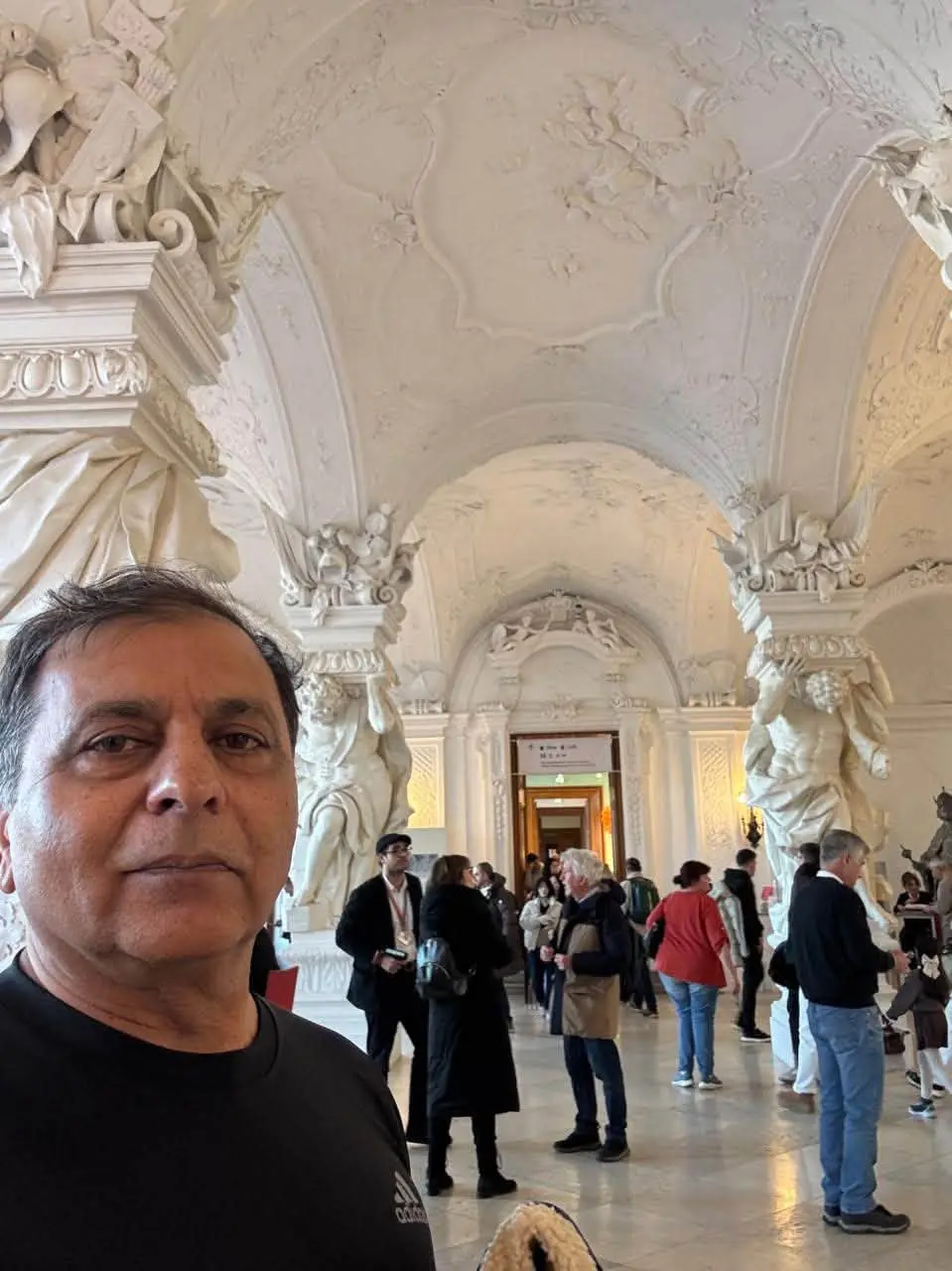
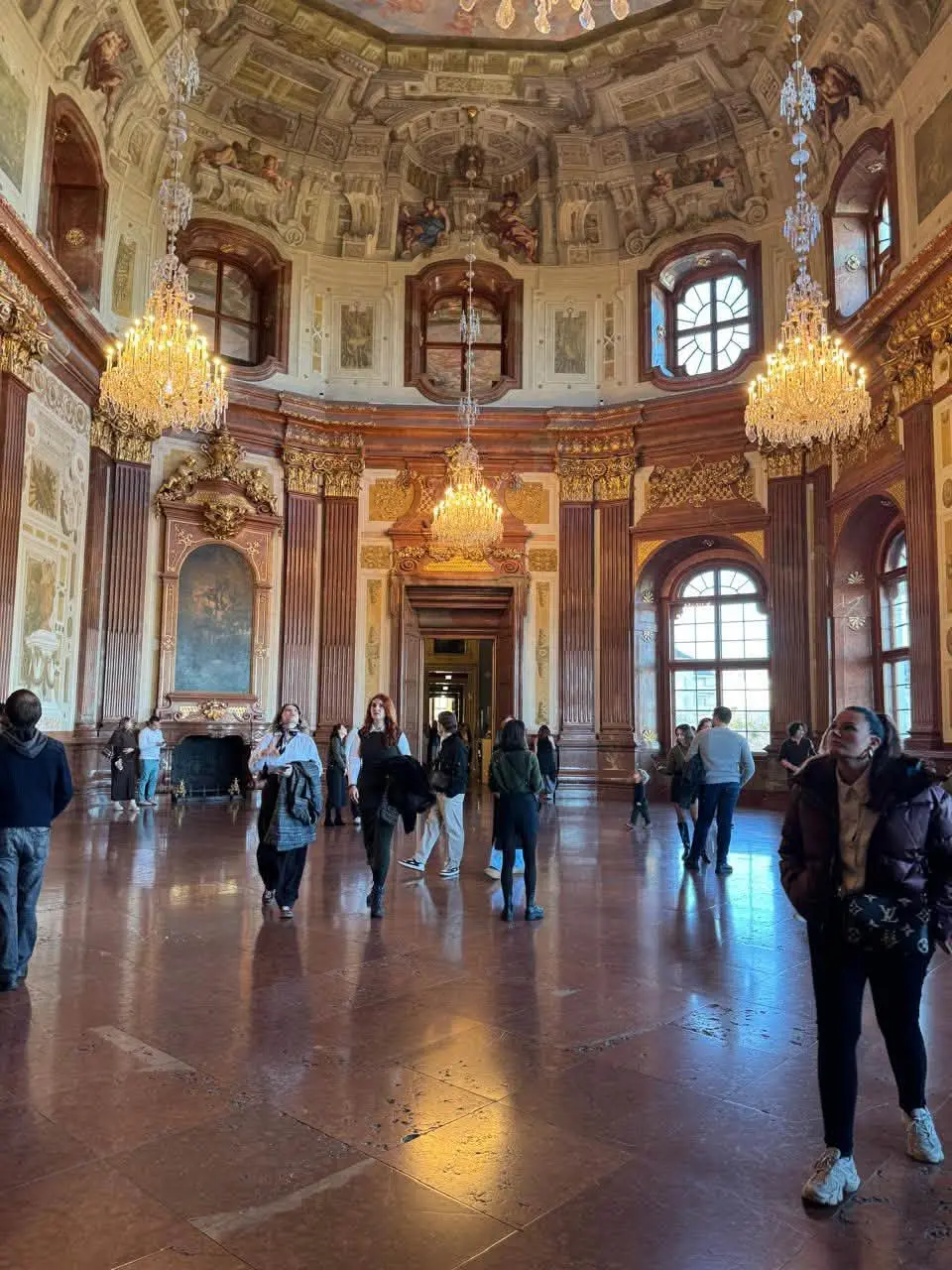
Entering Belvedere Palace was an experience in itself. Its magnificent staircases, white pillars and decorated halls immediately caught my attention.
The galleries display paintings from different historical periods, including works by Gustav Klimt, Egon Schiele and numerous other European masters.
Even someone with limited knowledge of painting can appreciate the artistic journey represented in these collections.
One of the highlights is Gustav Klimt’s famous painting The Kiss (1908–1909), depicting an embracing couple surrounded by decorative patterns and golden tones. It is one of the most recognisable paintings in the world.
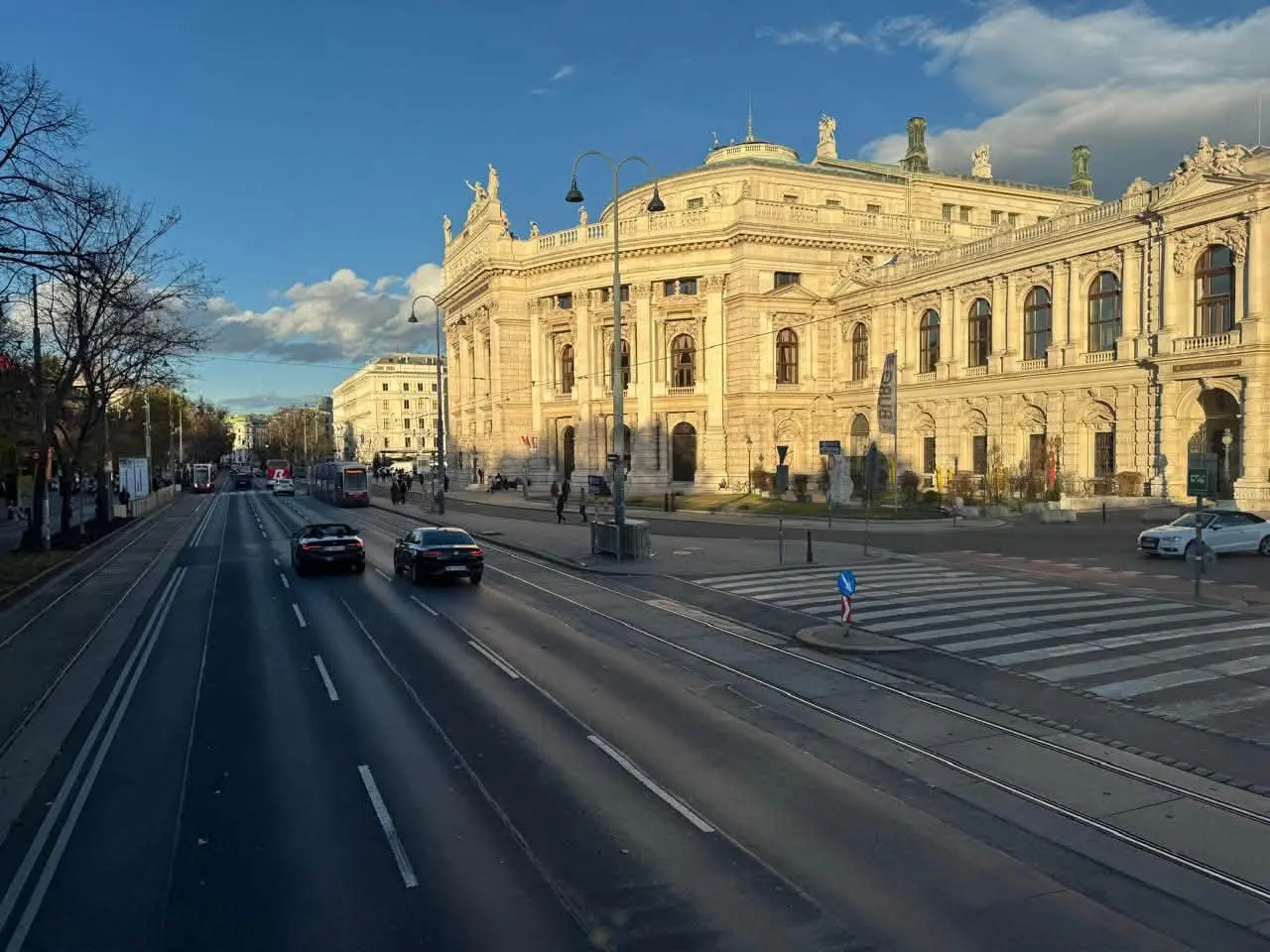
Many visitors purchase souvenirs featuring this masterpiece, while couples often pose for photographs in front of it.
Unfortunately, I was travelling alone, so I settled for a selfie!
Another famous painting depicts Napoleon crossing the Great St Bernard Pass on horseback, created by Jacques-Louis David.
Every hall in the palace is impressive, with magnificent architecture, sculptures and priceless works of art.
I noticed several independent artists sitting outside and painting the palace and gardens. It was a beautiful sight, and I wished I could have joined them.
One observation that has repeatedly struck me during my travels is that art flourishes when those in positions of authority actively support it. Vienna’s kings and queens encouraged artists, musicians, architects and garden designers, leaving behind a remarkable cultural legacy.
The same can be seen in the Mughal era of the Indian subcontinent, when royal patronage produced magnificent gardens, buildings and artistic traditions.
By the time I finished exploring Belvedere, it was well past midday. I returned to the Big Bus stop and decided to complete the Red Route, particularly because I wanted to see the Danube.
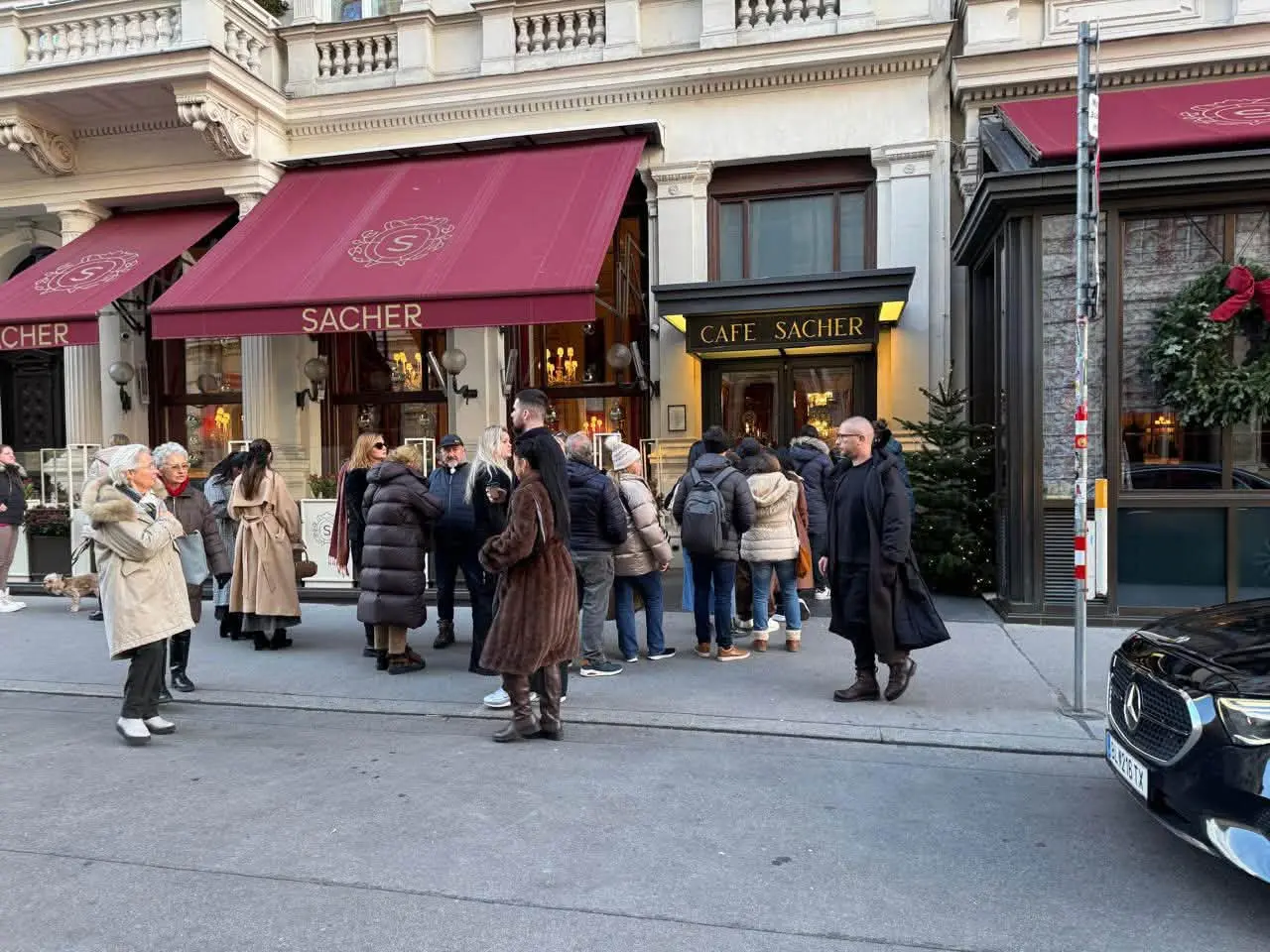
Before boarding, I hoped to try Vienna’s famous coffee-house culture at Café Sacher Wien and taste its traditional walnut cake. Unfortunately, the queue was extremely long, and waiting would have cost me nearly an hour. Even the takeaway counter was crowded, so I had to abandon the idea.
One of its first attractions was the House of Music, a fascinating institution housed in a historic building. Established as a museum in 2000, it offers interactive exhibitions covering musical instruments, composers and the development of music.
We then passed the magnificent Hofburg Palace, the principal imperial residence of the Habsburgs for approximately six centuries.
Originally constructed in the 13th century, the palace was expanded repeatedly over the years. Its architectural styles reflect different periods of Austrian history. Today, it houses important government offices, museums and the Austrian President’s official workplace.
Another landmark was Vienna City Hall, or Rathaus, built in the late 19th century in impressive Neo-Gothic style.
It is one of the city’s most magnificent buildings, with its towering structure, elaborate architecture and beautiful surrounding park. The building houses the mayor’s office and municipal government.
For me, City Hall was also a reminder of the importance of local government and administrative devolution. Vienna’s municipal administration demonstrates how empowered local institutions can contribute to effective urban management.
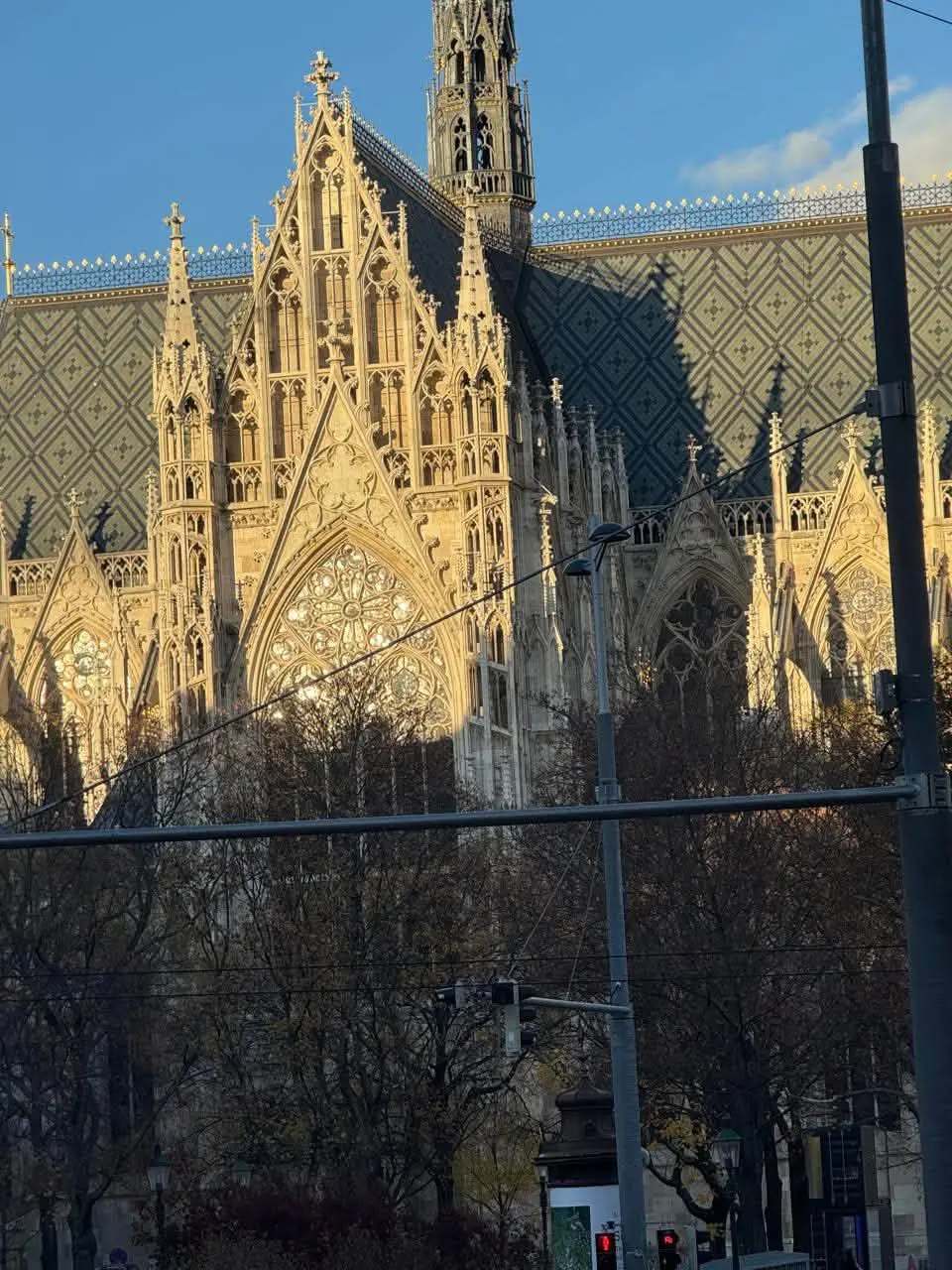
We also passed the famous Votive Church, constructed in the 19th century following an assassination attempt on Emperor Franz Joseph’s brother, Maximilian. Its magnificent Neo-Gothic towers rise approximately 99 metres, and its intricate stonework makes it one of Vienna’s most impressive religious buildings.
The churches of Vienna are not merely places of worship; they are also remarkable examples of European architecture and craftsmanship.
The Red Route continued eastwards, taking us towards Vienna’s modern districts.
We passed Hauptbahnhof, the city’s principal railway station and an important transport hub. Vienna’s railway network is extensive, and the station handles an enormous volume of daily traffic.
Having previously travelled by high-speed train from Budapest, I was particularly impressed by Austria’s railway infrastructure. Rail travel remains one of the most convenient and economical ways of exploring Europe.
We also passed the famous Prater entertainment district, home to the historic Giant Ferris Wheel, one of Vienna’s most recognisable landmarks.
As the bus crossed the Danube, the landscape changed dramatically. The riverbanks were lined with greenery, and numerous cruise boats and floating hotels were visible.
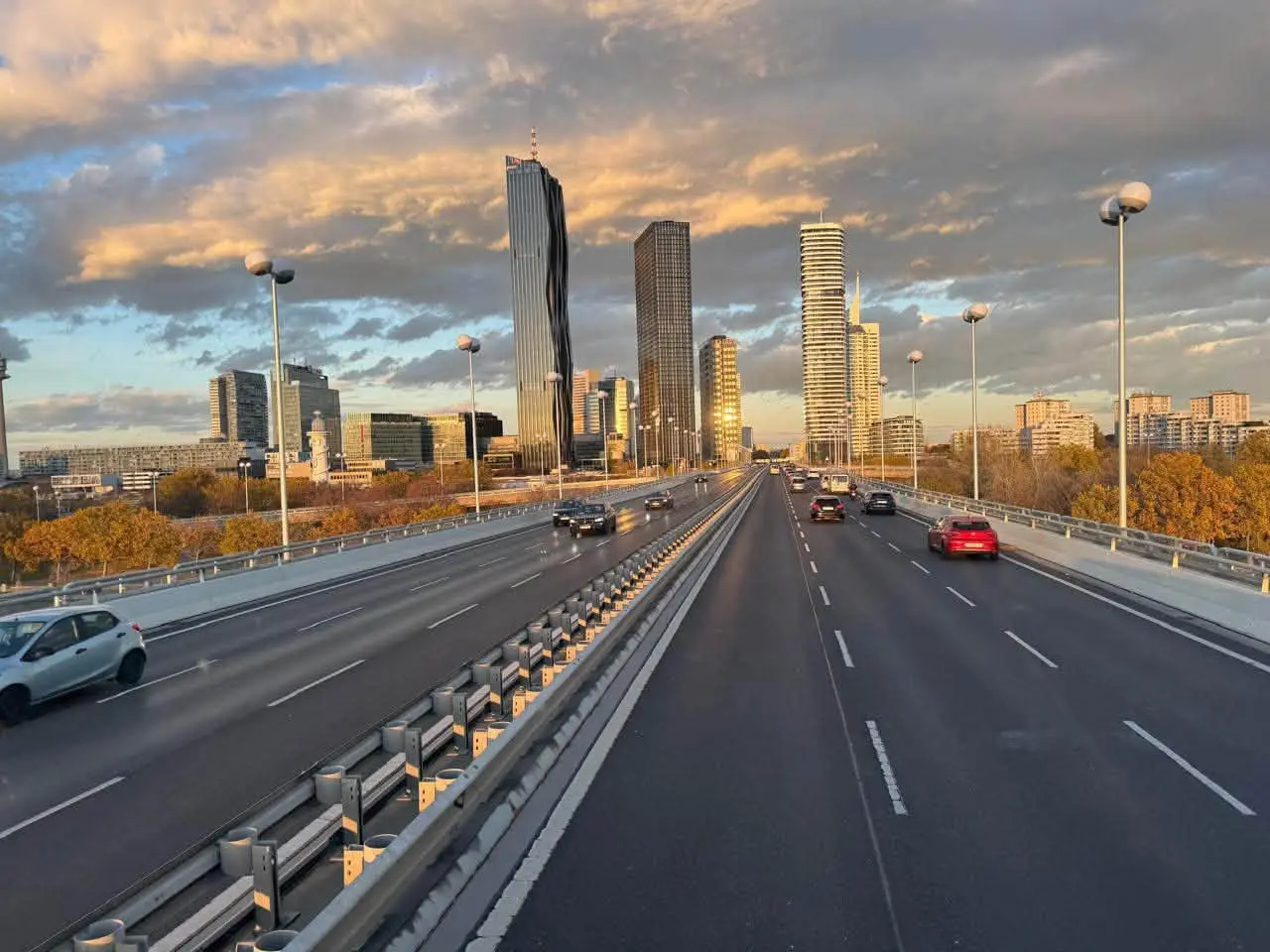
Across the river stands another Vienna, characterised by modern skyscrapers, international institutions and business centres.
The United Nations offices are located in this part of the city, reflecting Vienna’s importance as an international diplomatic centre.
I was also surprised to notice churches, synagogues and different religious institutions in the area.
Austria has a significant Jewish historical presence, although its Jewish population suffered terribly during the Holocaust. Thousands of Austrian Jews were murdered under Nazi persecution, leaving a painful chapter in the country’s history.
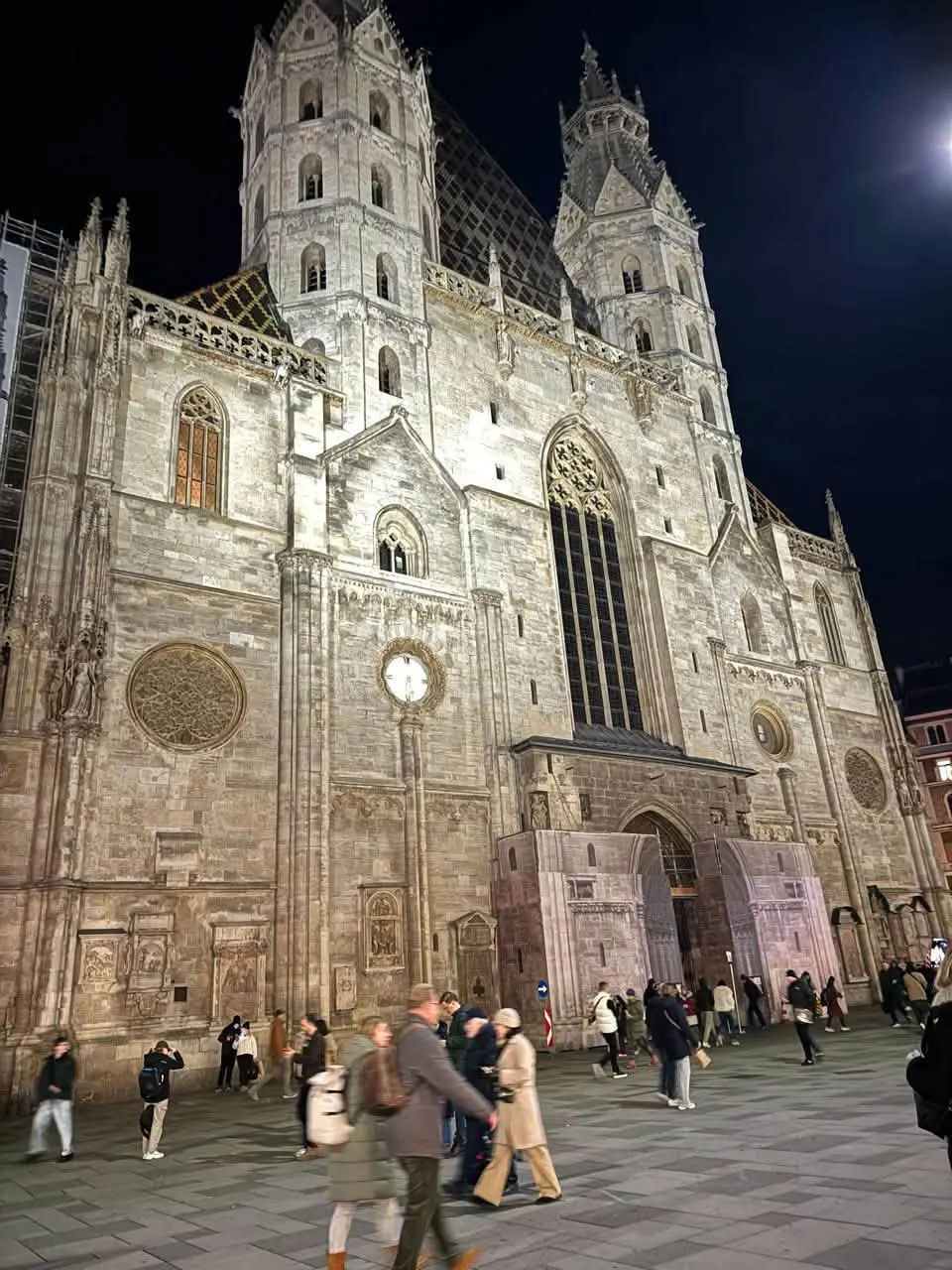
As the bus returned towards the city centre, the lights began illuminating the streets. We passed St Stephen’s Cathedral, perhaps the most iconic religious building in Vienna, surrounded by busy shopping streets and tourists.
After a long day, I returned to my hotel to freshen up. However, I was not ready to call it a night.
I had another interesting task to complete: finding a shop selling wool.
Someone had requested that I bring some wool, and after considerable effort, I finally located a shop called Wollwelt. It was a colourful place, offering different varieties of wool, knitting materials and accessories.
I was surprised to see so many customers, young and old, buying wool and knitting supplies.
It reminded me of the knitting needles that were once a familiar part of our mothers’ and grandmothers’ lives in Pakistan. Unfortunately, knitting and similar traditional crafts are gradually disappearing from our everyday culture.
The variety of colours, patterns and designs in the shop was fascinating.
After completing my shopping, I went out for dinner. Once again, fish was my preferred choice.
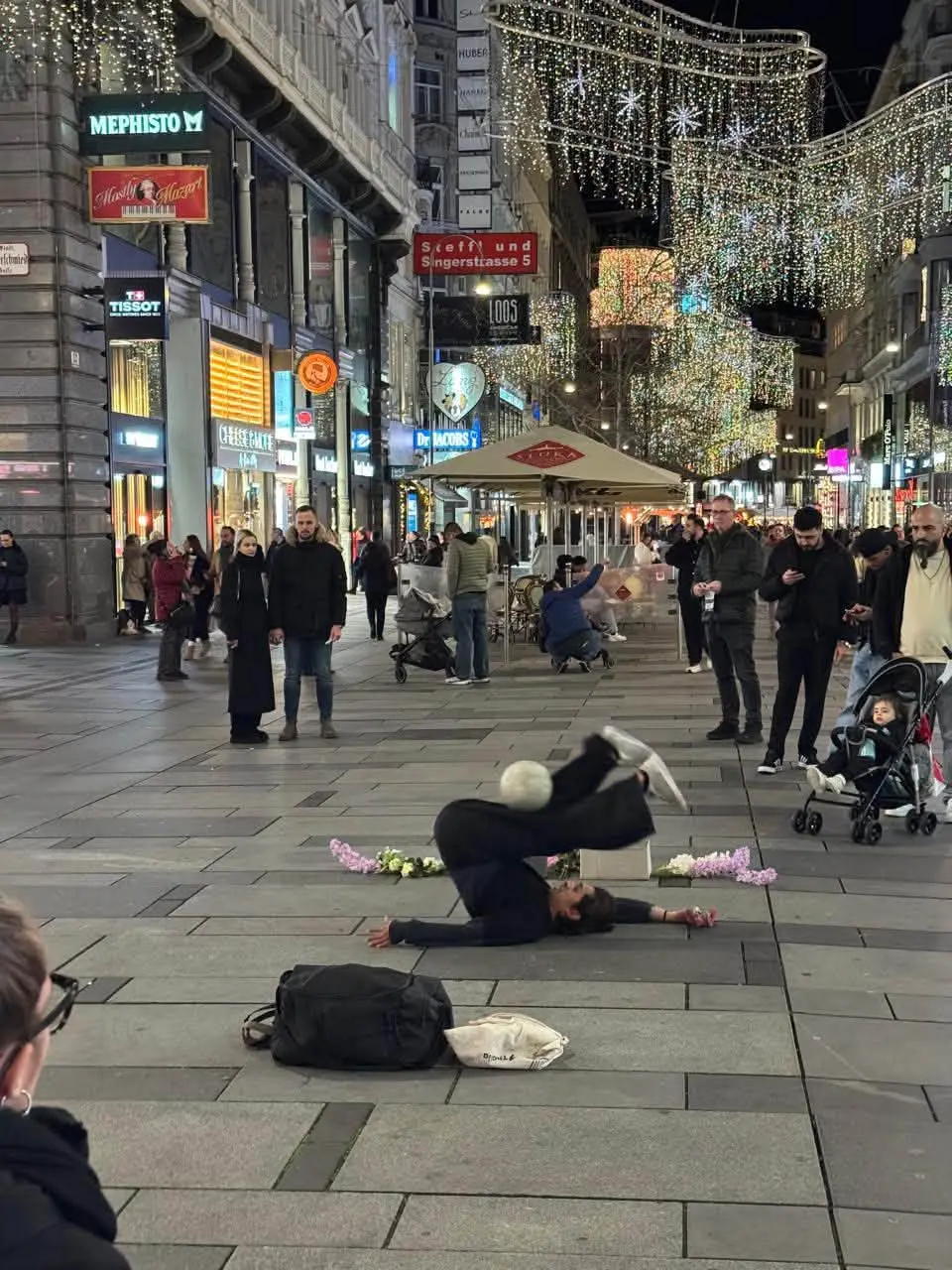
Vienna at night has a different charm. Street performers entertain tourists, Christmas decorations illuminate the streets, and horse-drawn carriages move through the historic centre, their horseshoes creating a distinctive sound against the pavement.
The city was still alive with visitors, although Vienna generally winds down earlier than many cities in Pakistan.
By around 10 pm, I was exhausted. I had walked more than 20 kilometres, explored two magnificent palaces, visited historic landmarks, enjoyed the gardens and experienced the Christmas atmosphere.
It was time to return to the hotel, pack my belongings and prepare for the morning flight.
Final Thoughts
Vienna is much more than a beautiful European capital. It is a city where history, architecture, music, art, governance and modern urban development come together.
Its magnificent palaces tell stories of emperors and monarchs. Its museums preserve centuries of artistic achievement. Its opera houses celebrate a musical tradition that has influenced the entire world. Its gardens reflect an extraordinary appreciation for nature and landscape design.
At the same time, Vienna demonstrates the importance of good municipal governance, public transport, preservation of heritage and investment in cultural institutions.
What impressed me most was how the city has transformed itself through centuries of political and economic change without losing its identity.
There is also a lesson for Pakistan. We have extraordinary archaeological sites, Mughal gardens, historic cities, traditional crafts and cultural traditions. What we often lack is the institutional commitment, investment and vision required to preserve and promote them.
Vienna shows what can be achieved when history is treated as an asset rather than a burden.
I left with beautiful memories, another ashtray for my collection and a renewed appreciation for a city that never seems to run short of stories.
Vienna is undoubtedly one of Europe’s most recommended destinations, and I would happily return for a fourth visit!