

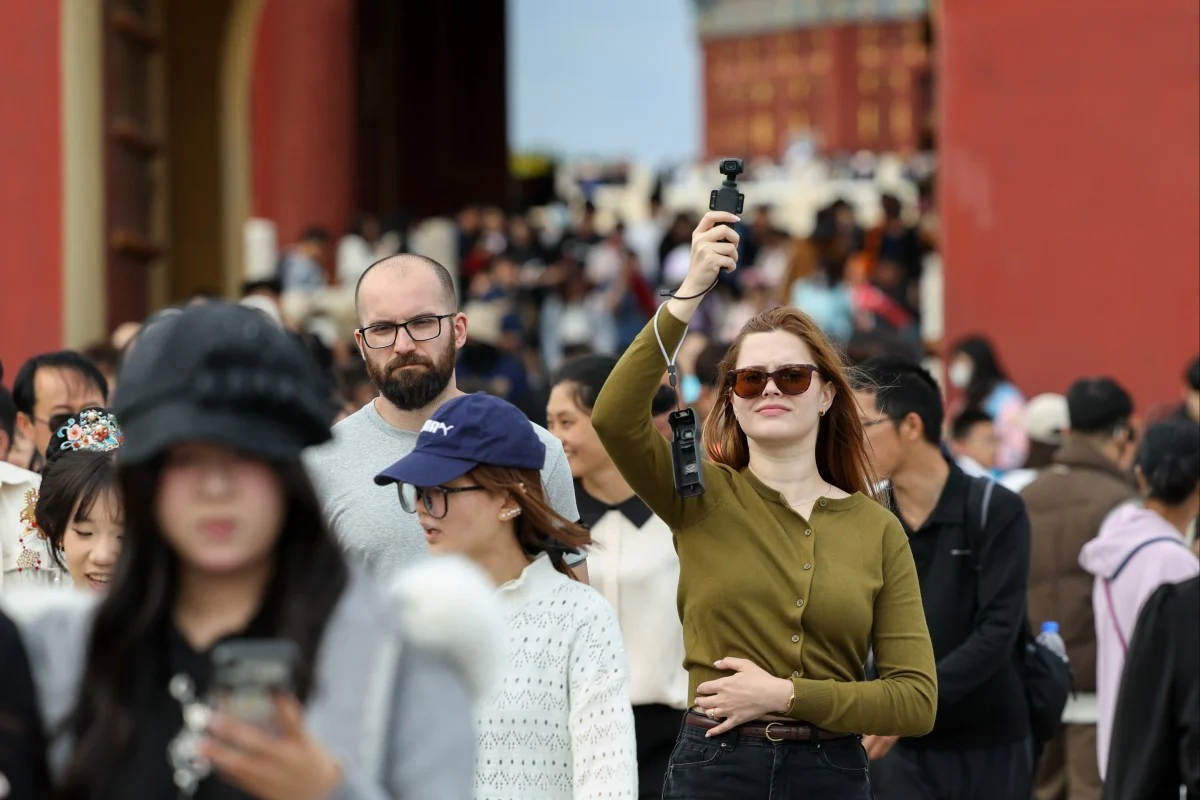
BEIJING: China’s expanded visa-free travel policy is delivering significant economic dividends, triggering a sharp rise in foreign visitor arrivals, boosting tourism revenues and encouraging international travellers to explore destinations beyond the country’s traditional hotspots.
A growing number of tourists from Europe, Australia, North America and other Asian countries are taking advantage of relaxed entry regulations to visit China, with many extending their journeys to inland provinces and lesser-known destinations.
According to data released by online travel platform Fliggy, inbound travel bookings during the recent Dragon Boat Festival surged by more than 600 per cent compared with the same period last year. The increase reflects the growing appeal of China as an international tourist destination following the expansion of its visa-free programme.
The aviation sector has also benefited from the policy changes. Industry data shows that direct inbound flights to China increased by 8.3 per cent year-on-year in the 12 months ending in June, while airlines scheduled more than 22 million seats into the Chinese market during the summer travel season, representing a rise of over four per cent from last year.
The strong momentum follows a robust Labour Day holiday in May, when cross-border trips by foreign nationals reached 1.26 million, up 12.5 per cent year-on-year. Of those entering China, nearly 436,000 travelled under visa-free arrangements, registering an increase of almost 15 per cent.
Faced with a property sector slowdown and subdued domestic consumption, Chinese authorities have increasingly turned to tourism and the services sector as important drivers of economic growth. Since late 2023, Beijing has extended visa-free access to more than 50 additional countries, significantly improving the country’s attractiveness as a global tourism destination.
The government has also introduced a series of measures aimed at making travel easier for international visitors. These include extending visa-free transit stays from six to 10 days, providing instant tax refunds for departing travellers and improving payment systems to facilitate the use of foreign bank cards and digital transactions.
In addition, more than 290 major tourist attractions across the country have introduced multilingual ticketing systems and enabled foreign passport holders to make reservations directly, removing a longstanding barrier for overseas visitors.
The easing of travel restrictions is not only increasing visitor numbers but also encouraging tourists to venture beyond Beijing and Shanghai to destinations such as Guizhou, Hunan, Heilongjiang, Shanxi and the Xinjiang Uygur Autonomous Region. Several provinces recorded inbound visitor growth exceeding 60 per cent during the May Day holiday, while cities such as Qingdao and scenic destinations including Zhangjiajie and Guilin saw foreign arrivals more than double compared with a year earlier.
The economic benefits of the tourism boom are substantial. Increased international arrivals are generating higher spending on hotels, restaurants, transportation, retail and entertainment, providing a major boost to local economies and supporting employment in the services sector.
Analysts believe that a sustained rise in inbound tourism could also help narrow China’s services trade deficit, which has been driven largely by Chinese travellers spending more abroad than foreign visitors spend within the country.
With international connectivity improving and travel procedures becoming increasingly visitor-friendly, China’s visa-free policy is emerging as a powerful tool to stimulate economic activity, strengthen the tourism industry and position the country as one of the world’s leading travel destinations.