
By:
Lt Gen (R) Sardar Hasan Azhar Hayat
MD Pakistan Land Port Authority
Ex. MD Green Tourism Pvt. Ltd
On a beautiful Sunday morning, after it had rained during the night, I was worried about the weather. However, when I got up for namaz, it was partially cloudy, with hardly any chance of rain. It was a perfect day without much sunshine.
My destination was to walk from Taxila to Shah Allah Ditta, crossing the Margalla Hills. Whoever I asked, and whatever I researched, suggested it was a three-to-four-hour hike. I was determined to do it! I really wanted to travel from Taxila to Islamabad, rain or no rain.
We left for Taxila at 7 am from my village. I have always felt blessed to have my village, Wah, at a central location at the crossroads to KP, Kashmir and Hazara, and along the routes of invaders and civilisations, whether prehistoric, Hindu, Buddhist, Muslim, Sikh, British or even modern-day Pakistan. This area has remained in the limelight from the pre-Bronze Age to its emergence as a modern industrial hub, having housed civilisations over centuries.
I had requested the Gandhara Resource Centre, a local organisation, to help me arrange a guide. The Taxila Museum authorities also came to know about my visit and promised to provide one. When we reached the museum, we found Mr. Insanullah, a decent young man in his late twenties, waiting for us. He was the museum’s media coordinator, having initially joined as a Punjab government intern before securing a contract job. He hopped into our car.
A pleasant companion, I must say, and I always feel how important a guide is on such journeys.
We travelled along the road beside the museum and, after covering two kilometres and turning east, reached Khurram Paracha village. The sun was now trying to peep through the clouds. As we took a single road behind HIT, a typical farm-to-market route, we passed through the village, which was still asleep.
Our guide pointed towards a plateau in the distance that housed the Kanala Stupa. Within 15 minutes, we had crossed the village and reached a muddy track with spring water running over it.
Members of the Gandhara Resource Centre were waiting to receive us. Over time, I have developed a bond with them and know them well. They included Mr. Riaz, a retired HMC employee who runs a school, his son, Ms. Sara, an employee of WWF, and Mr. Azeem, also retired from HMC, who had a house nearby. Our host, Mr. Azeem, owns loquat orchards and is commonly known as Bagh Wala.
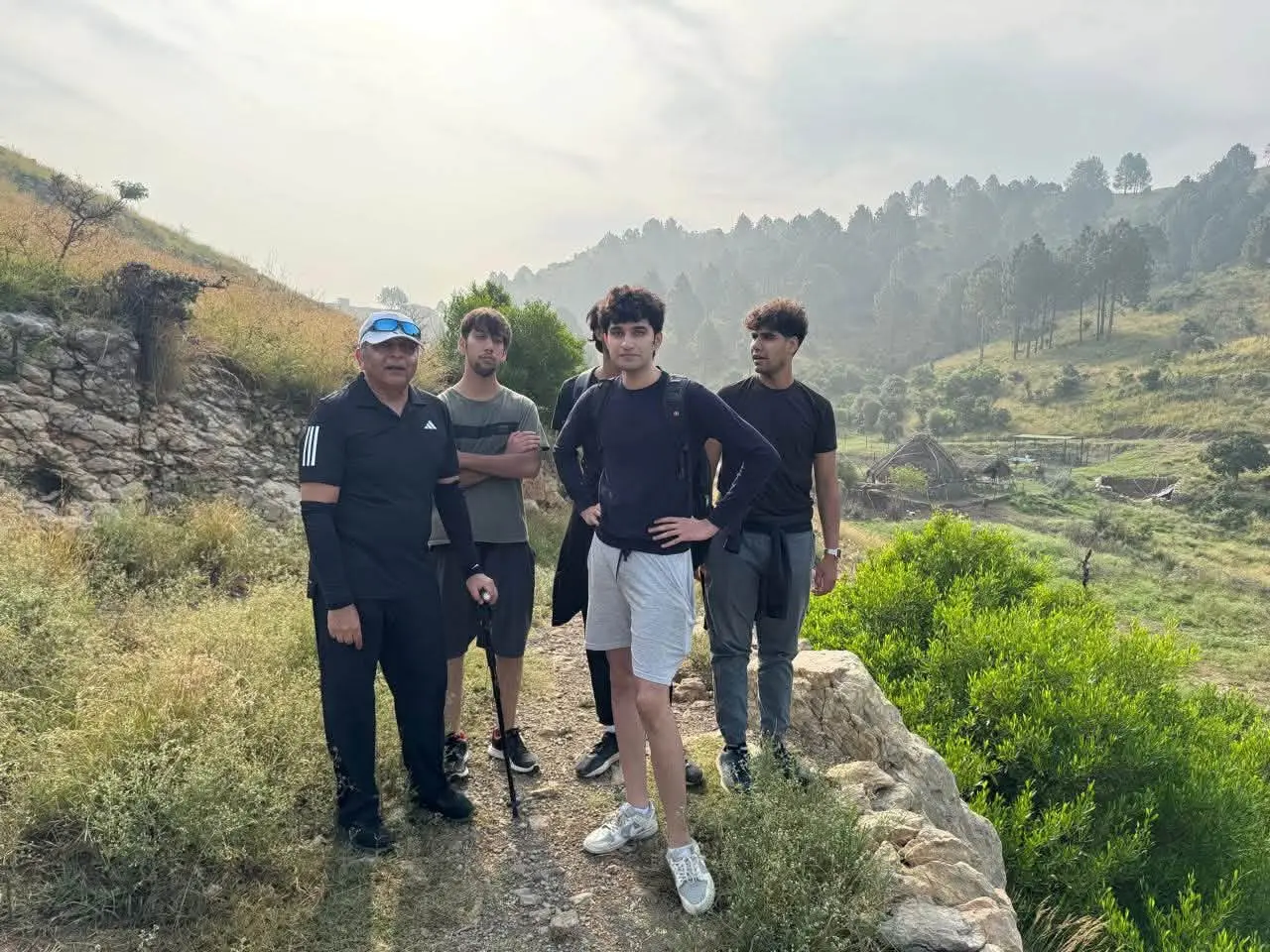
We had a 4×4 vehicle, so we accommodated them and left for Girri, our first destination.
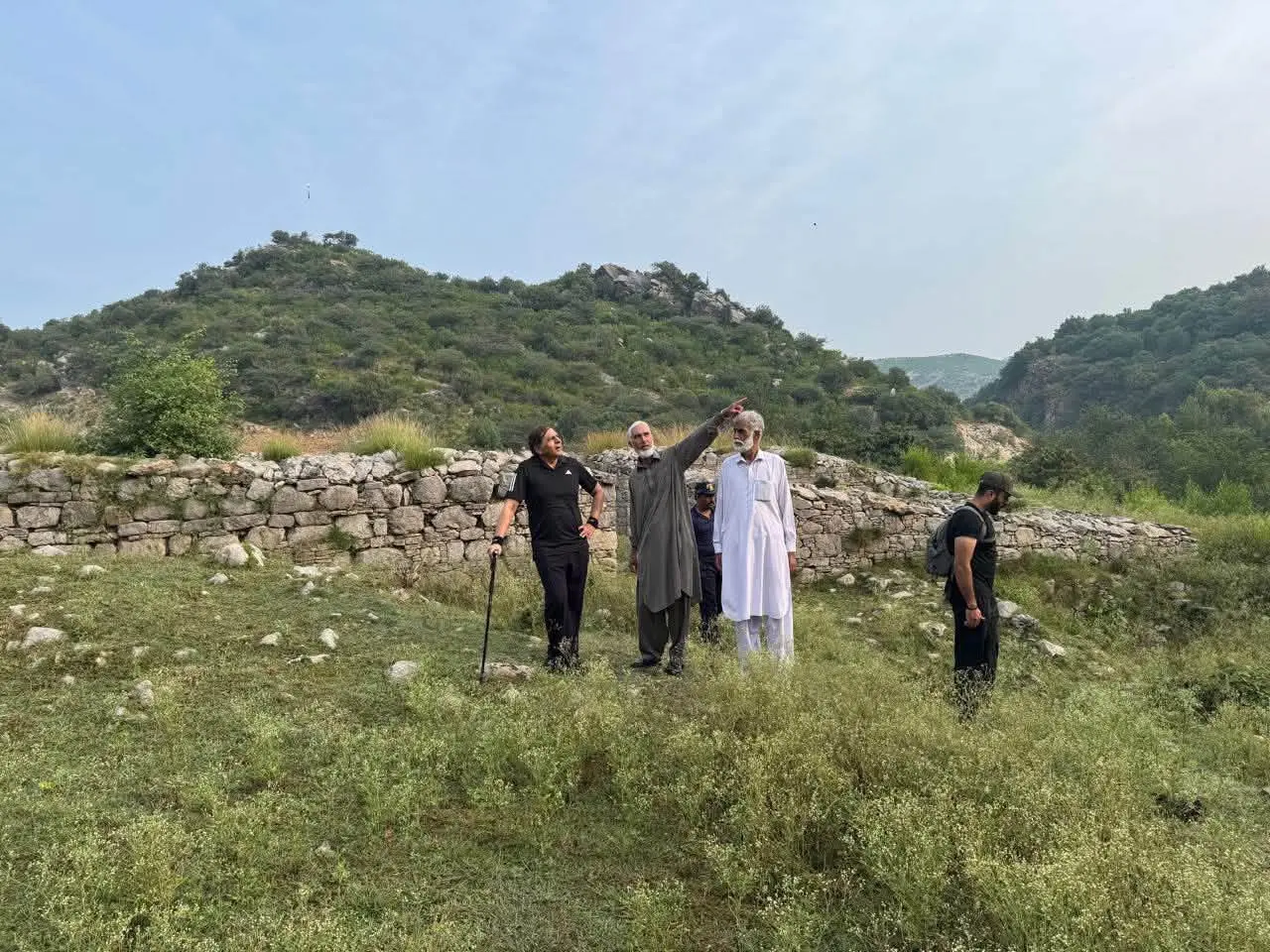
In ten minutes, we reached Girri, a beautiful area at the foothills of the Margalla Hills on the Taxila side. It is a U-shaped valley with a re-entrant into the Margalla range. Girri is a divided archaeological site, away from many eyes, with four attractions, including a fort.
A 4×4 can take you to the base, from where another five-minute walk leads to the high point where the fort’s remains stand. I believe it existed during the Hindushahi period, but my research links it to Mahmud Ghaznavi, son of Sabuktigin, who attacked the Hindu throne in the subcontinent 17 times.
After his death, infighting among his children ruined the dynasty. His sons, Muhammad and Masud, fought over the throne. While Muhammad was supposed to inherit it, Masud prevailed but was defeated at the Battle of Dandanaqan in central Turkmenistan. He travelled back to the subcontinent for refuge, but his army betrayed him. His troops imprisoned him in Girri Fort, where, according to history, Muhammad’s son later ended his life.
I believe there were two or three important crossings over the Margalla Hills. One was Margalla Pass, the second was Girri, and the third lay further north and is considered Alexander’s crossing. Girri was an important resting place.
The infighting among Mahmud Ghaznavi’s heirs took place around 1030–1040 AD. Much earlier, in the second century BCE, this area was a place of learning, with a university and monastery.
At Girri, we crossed to an adjacent hill and, while climbing, were shown a famous pond that served as a resting place. A natural spring emerged through an aqueduct or karez, which was clearly visible. I peered into it before reaching an old mosque believed to have been built either by a descendant of Mahmud Ghaznavi or by the Mughals at a later date.
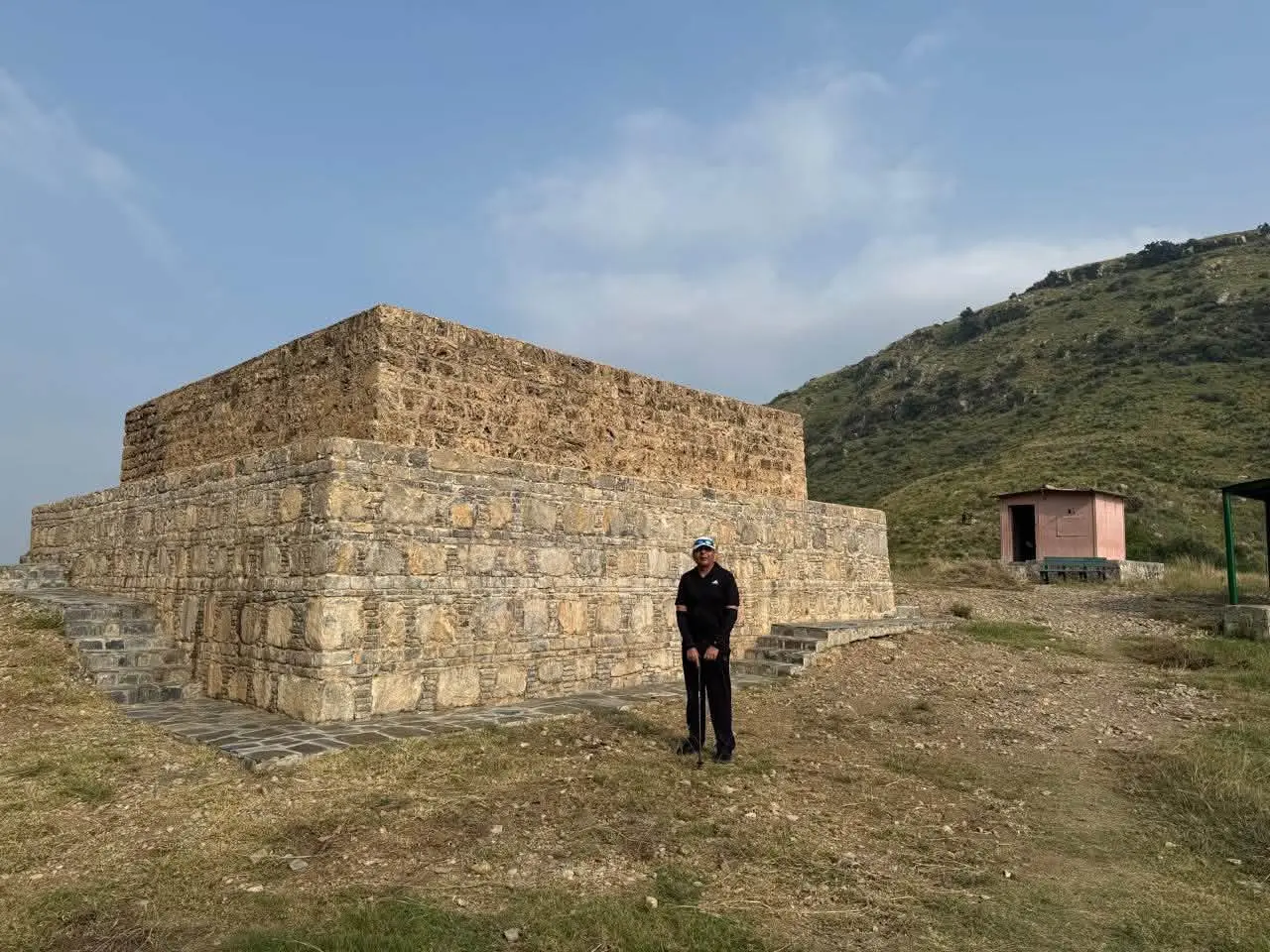
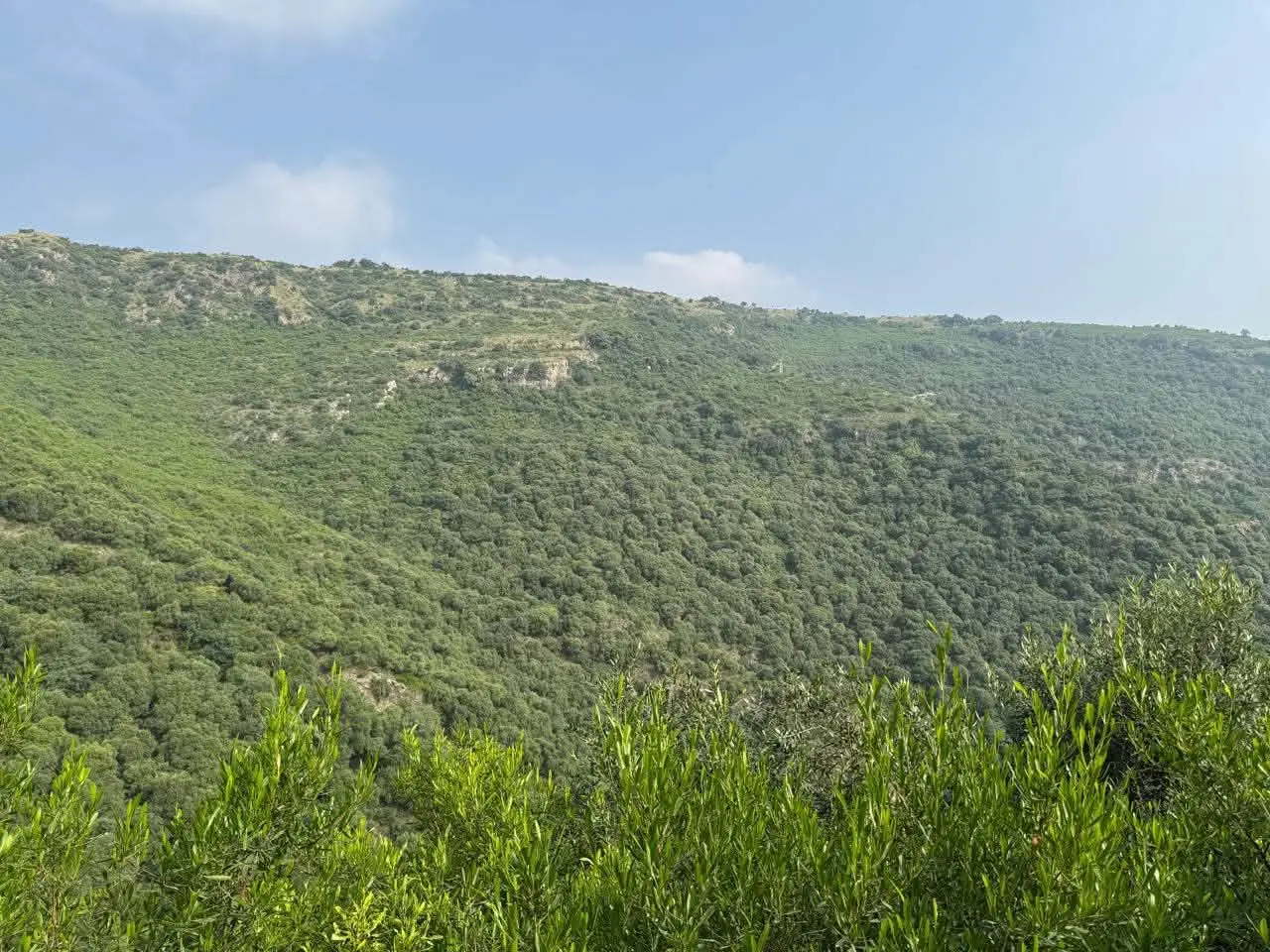
From here, relatively new stairs lead to the stupa at a high point, from where the fort is also visible. The valley remains the same, with beautiful views of the Margalla Hills, whose stone walls resemble canyons.
We saw the main stupa and monastery. I asked the members of the Gandhara Resource Centre and our guide why the canyons had no caves or Gandhara remains. They told me that petroglyphs and markings had been found on the canyon walls.
I recalled the Ajanta Caves in Maharashtra, India, as there was considerable resemblance. In Buddhism, the three schools of thought, isolated caves and monasteries have many links.
I do not want to bore readers with too much detail in this travelogue, but I must mention that I have found shrines of Muslim-era saints wherever I have encountered caves. Perhaps it is the peace of mind associated with worship. Here, too, I found a Bokhari shrine.
I also noticed isolated farms in the wilderness and was told that some people had bought mountain land to build retreats. I believe this is a beautiful site, combining scenery, water and history.
The Archaeology Department needs to secure the land before others buy it, as I learnt about some land grabbing by an influential Pir. The ruins also need to be developed for visitors, with proper markings and information about their history, which I had to explain to the locals and our guide. Needless to say, much more excavation is required.
After exploring this beautiful site, we said goodbye to our friends from the Gandhara Resource Centre, who left to see Bhal Valley, while we prepared to climb the Margalla Hills.
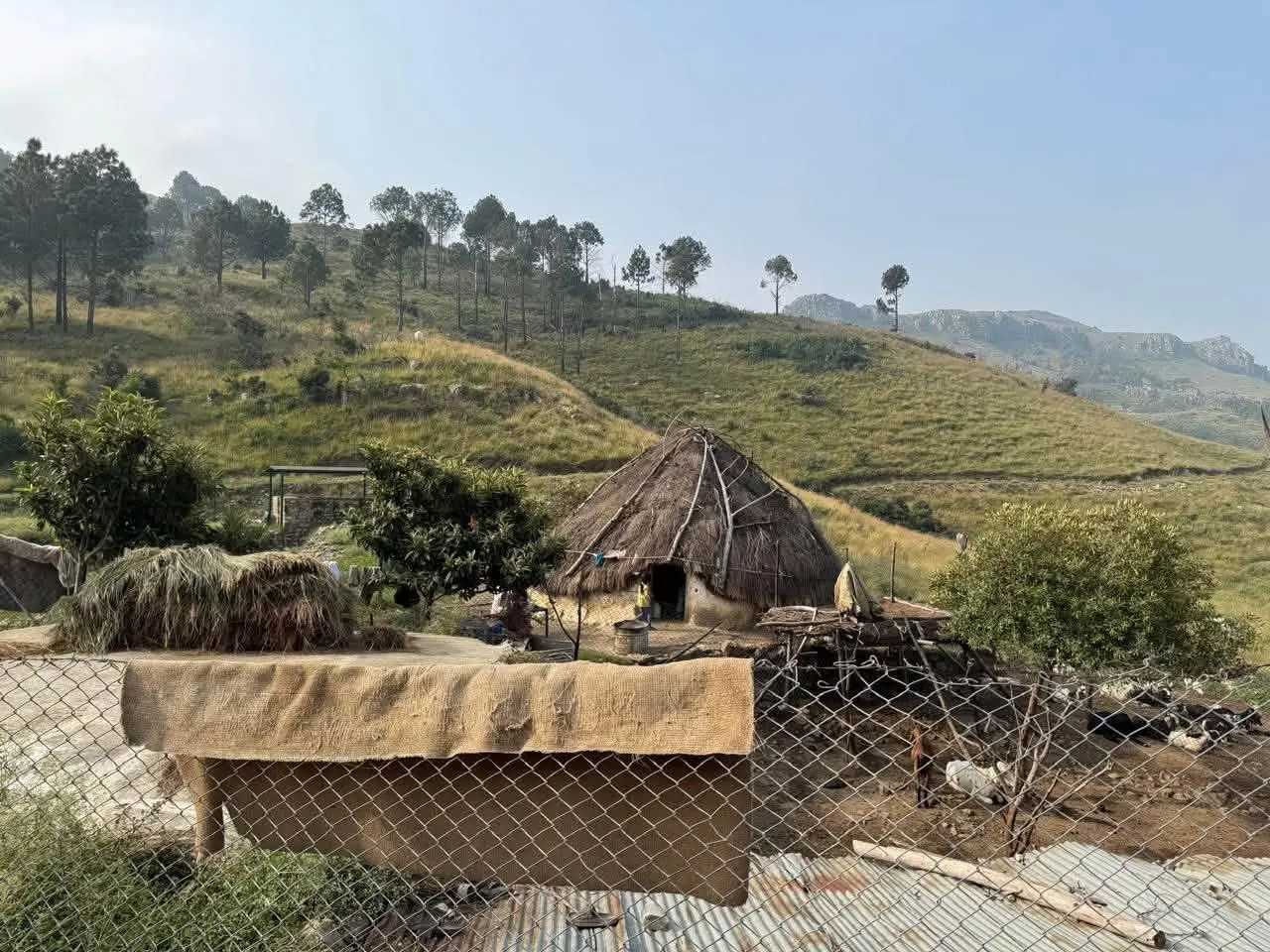
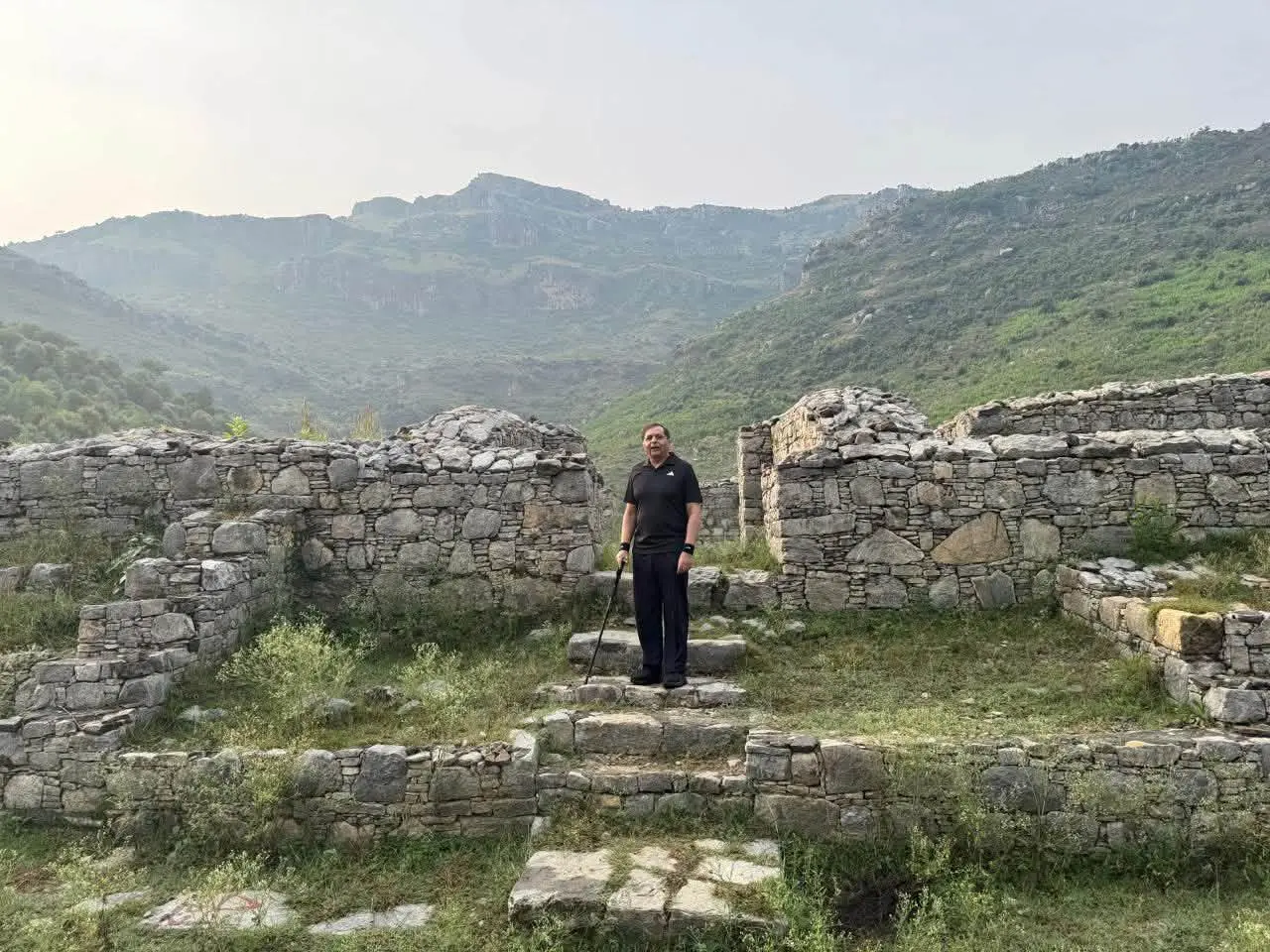
Our next destination was Ban Faqiran, a stupa dating to the first century BCE in the Islamabad district, on top of the Margalla Hills.
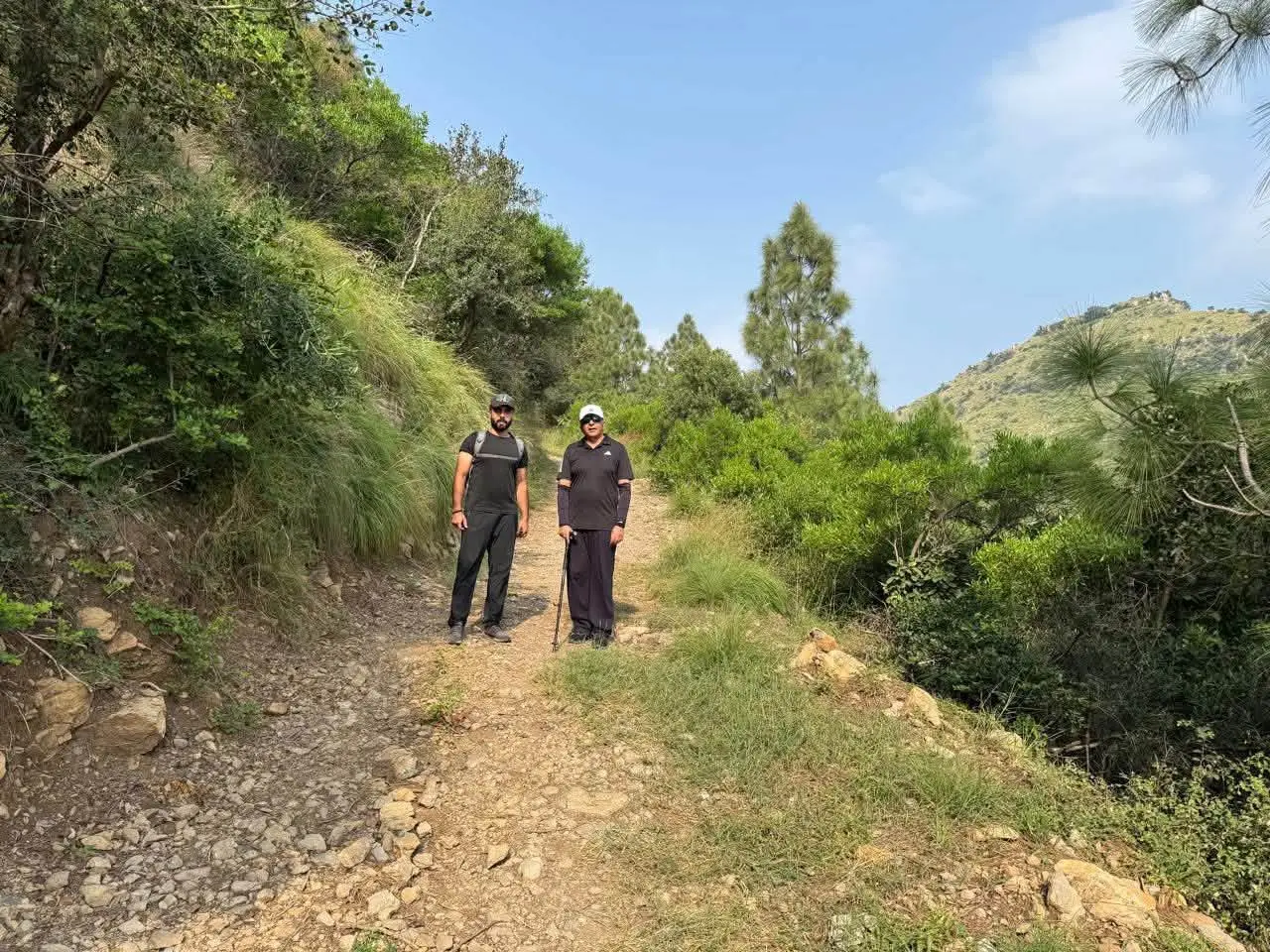
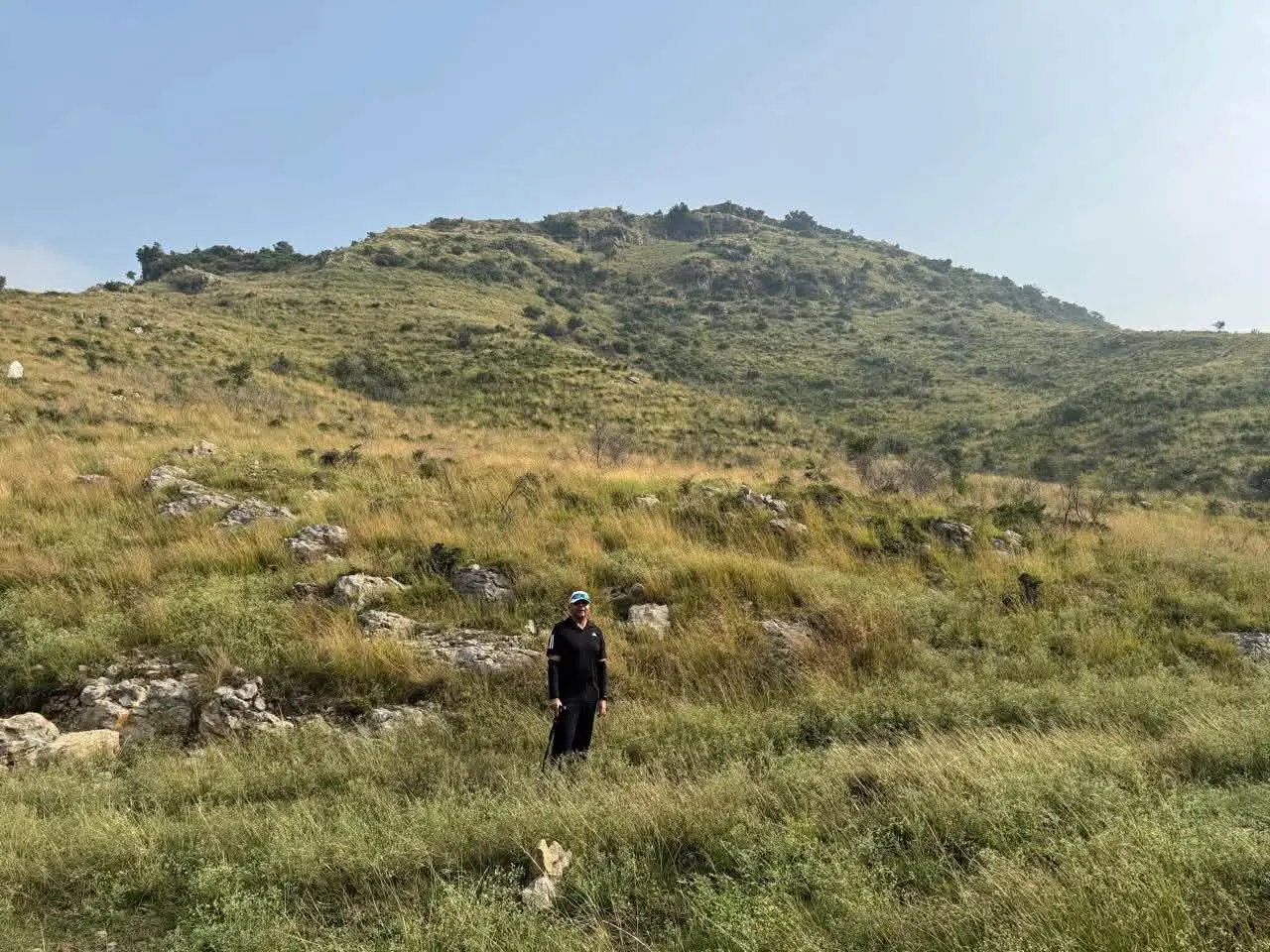
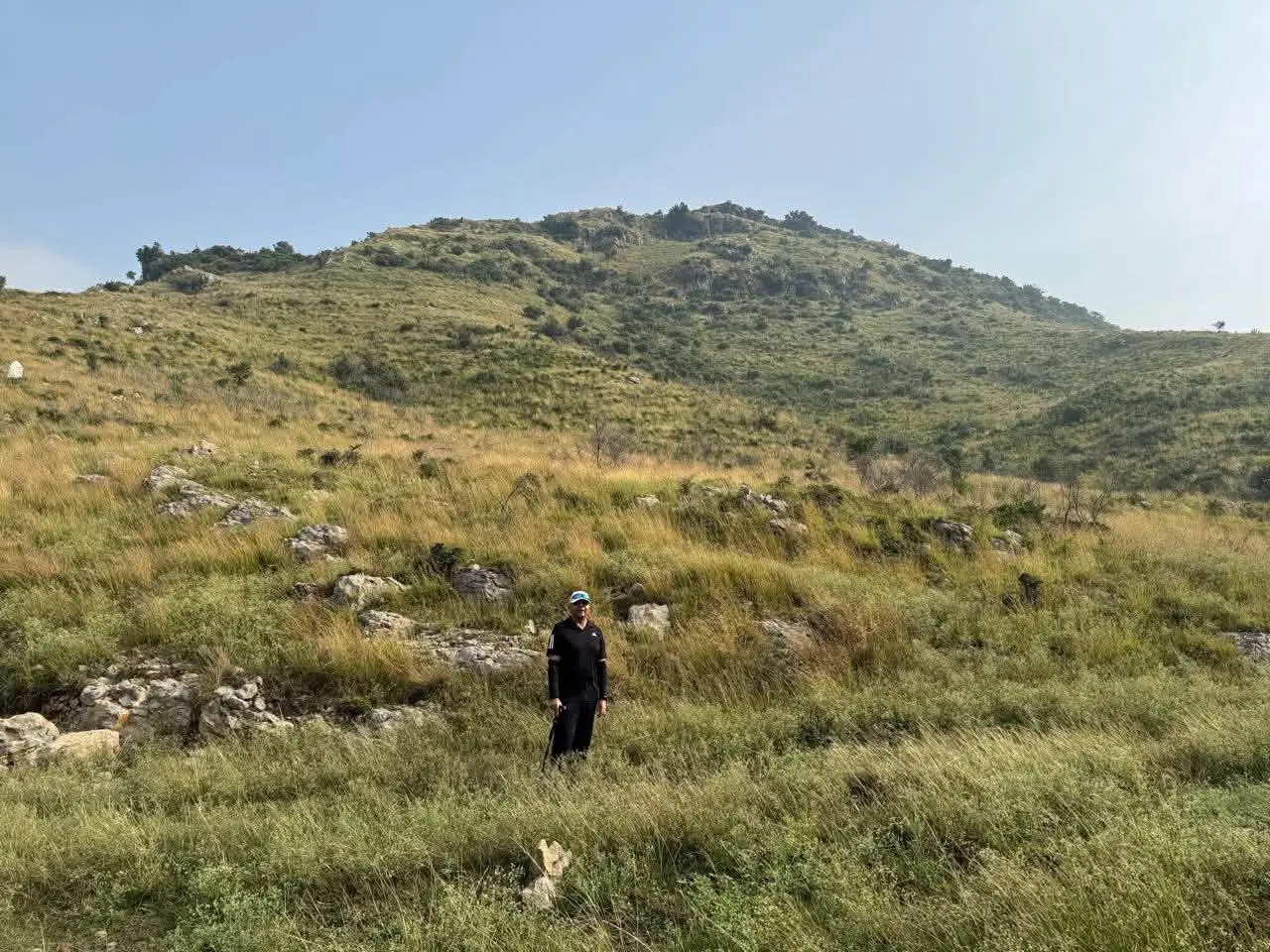
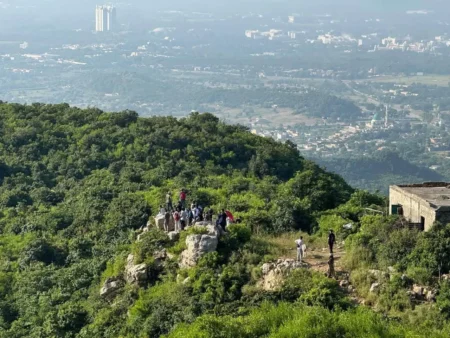
There had been some habitation near the beginning of the route, but as we climbed an old track, we entered the wilderness. Our guide asked us to look back towards the Taxila Valley, from where we could make out a few landmarks.
It took us 40 minutes to reach the area. I could see a few tourists or backpackers in silhouette, as there was hardly a soul around. When we approached them, we discovered they were teenagers from different universities in Islamabad.
I encouraged them to visit Girri, but I do not think I succeeded. They were rather surprised that we had come from Taxila. Actually, I was also surprised to have reached Islamabad in just 40 minutes. We had spent an hour at Girri, and it was still 9 am!
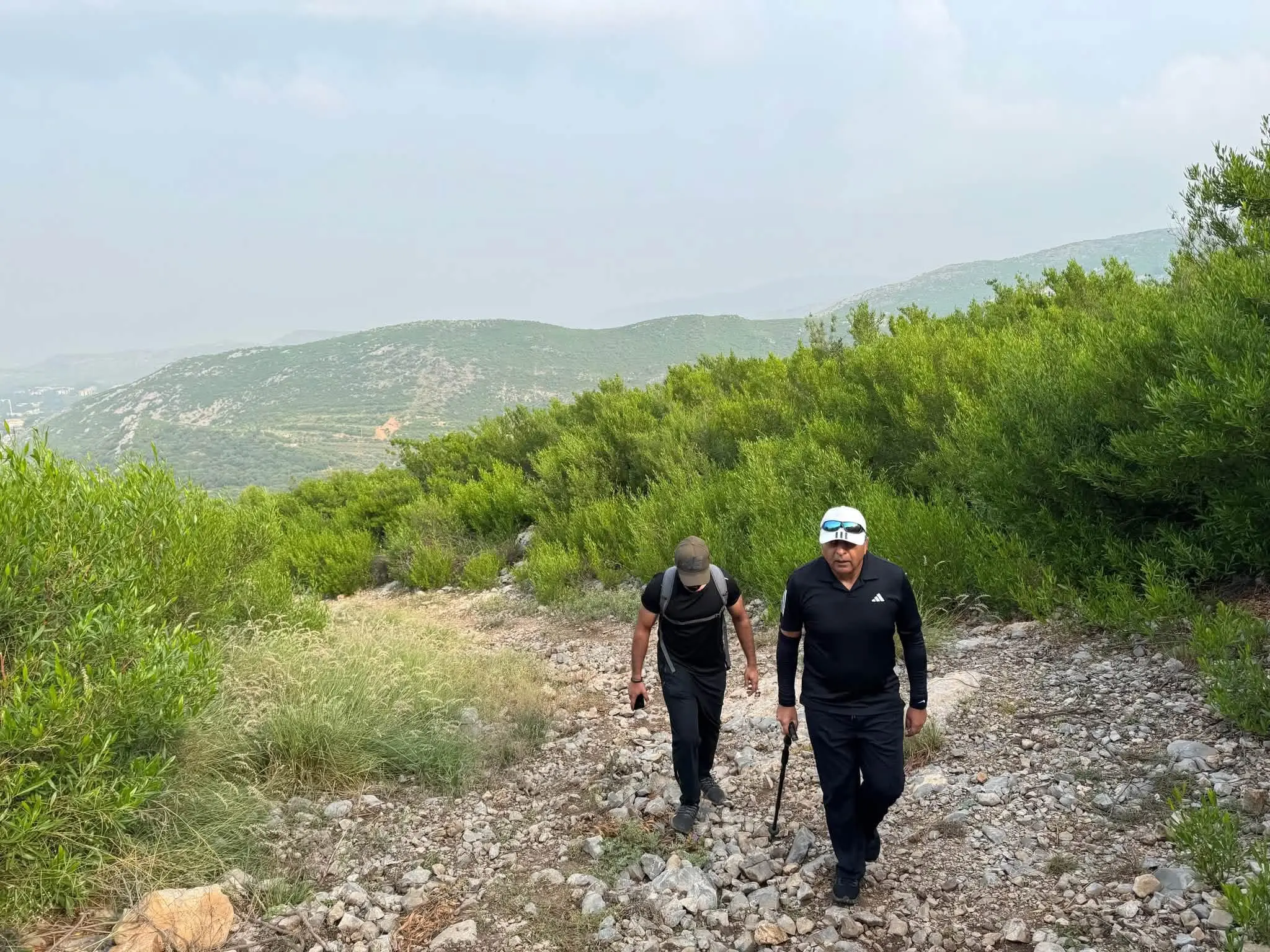
We continued walking along the gradual slope, with pine forests beginning to appear on top of the Margalla Hills. Suddenly, I saw a beautiful plateau with a straw-and-mud hut beside an empty pond. This was Ban Faqiran, also commonly called Band Faqiran.
Our guide knew a man named Juma Khan, the only person living there, and wanted to stop for refreshments at his mountain dwelling. I still had energy, and from the top, I could see the stupa. We climbed for another ten minutes to reach it.
Ban means a pond, while Faqiran means saints. Standing beside the stupa at this height, we were at a watershed from where both Islamabad and Taxila could be seen across the Margalla Hills.
The first-century stupa was well preserved and reasonably laid out. My companion asked if we could rest there, so I decided to take a smoking break.
Mr. Juma was an interesting person, a Gujjar from Mansehra, with a typical Gujri accent and moustache, carrying an axe in his hand. I asked him if he had ever seen any wildlife.
He immediately began narrating a story about an incident a few months earlier, when a leopard had attacked him, gripping his shoulder with its jaws and piercing the skin near the top of his shoulder and armpit. He struck the leopard with a stick, but the animal then held his leg. He continued beating it until it finally disappeared.
I found his story convincing. He also told us that he could hear leopards at night. According to him, many foreigners visit the place from Islamabad. I could also see a few trekkers on nearby mountain tops.
Our next destination was Buddha Caves, which involved a descent into Islamabad.
On the way, we met another group of youngsters who asked, “How far is Ban Faqiran?” We told them it was ten minutes away, but they did not believe we had come from Taxila and had hardly climbed. I could see their jeep nearby, but I could not blame them, as I was also surprised at how quickly we had reached the area.
When we talk about greater Islamabad and its link with Taxila, the old capital, the reason becomes obvious. In our minds, the Margalla Hills are a barrier, whereas the two places are actually very close.
As we descended into the beautiful valley, I thought, thank God we have not built a road here; otherwise, the place would be in a mess.
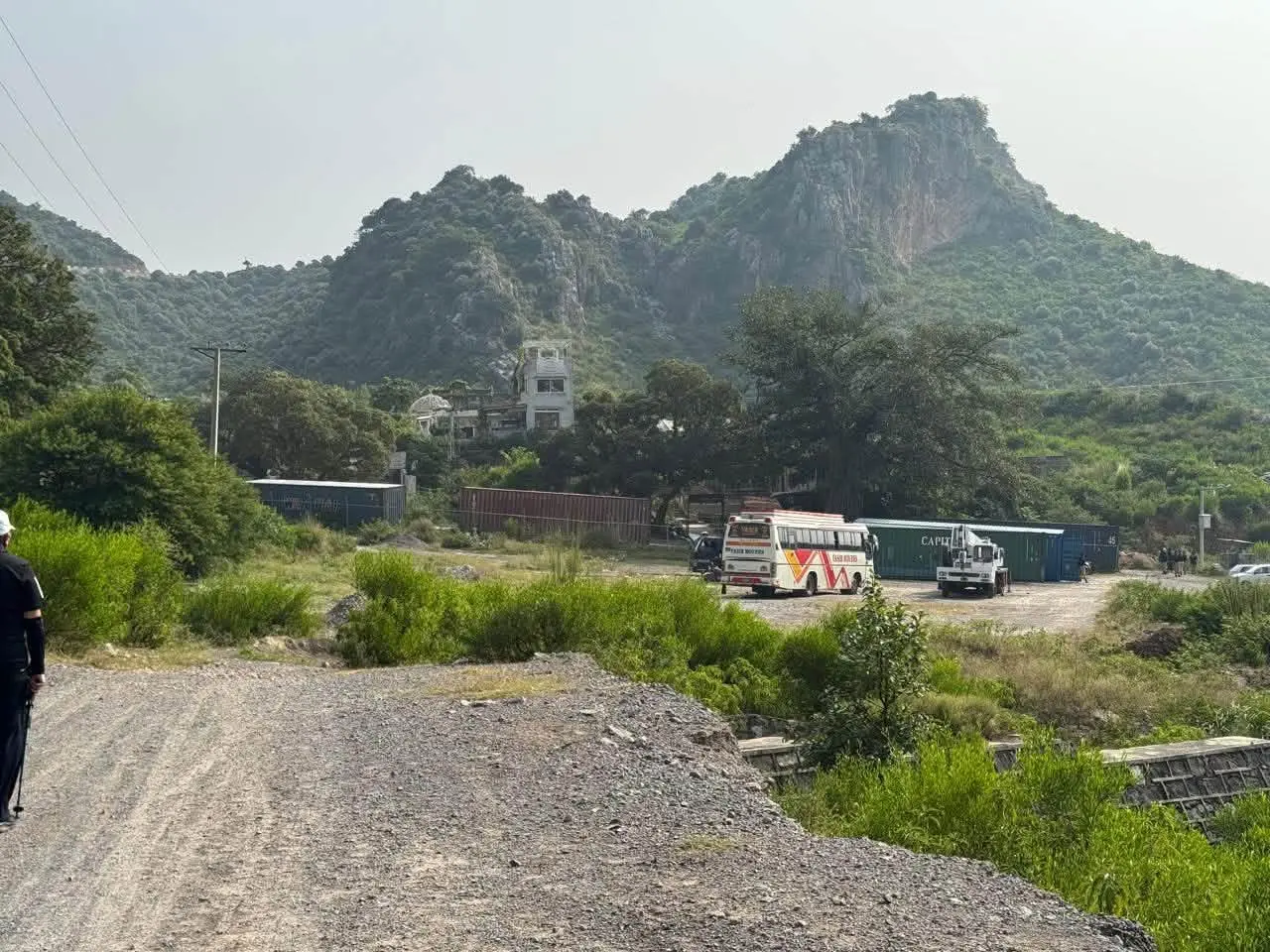
It took us 20 minutes to reach an open space with a beautiful spring beneath a banyan tree. Opposite it stood a large, steep cliff, ideal for rock climbing. I could see construction, buses, containers and signs of life about a kilometre away.
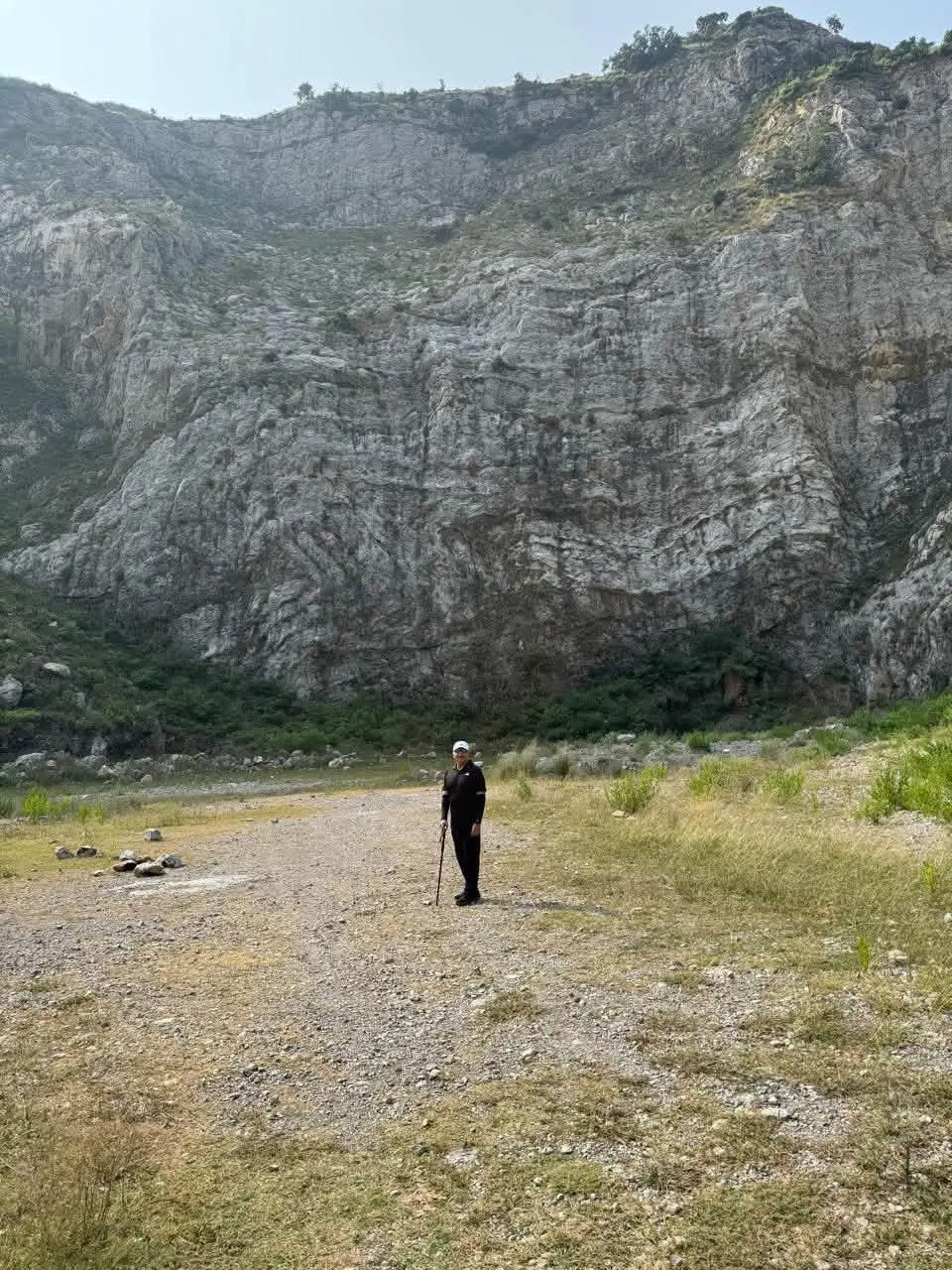
I asked our guide about the area. He explained that this was the parking area for Buddha Caves, beside the road leading to KP, with two resorts, Alexandra and Baad-e-Nasim. He said the place was like the Mall Road of Murree, offering horses and cafés.
We were now on a road in a beautiful setting, but the presence of police personnel, mostly from Sindh, and containers blocking the route because of a dharna made it an ugly sight in an otherwise beautiful valley.
It was barely 9:30 am, so I told my driver to pick us up. He was equally shocked at how quickly we had completed the journey.
A good road leads from Islamabad towards Tarnai, Haripur and KP, passing next to Buddha Caves. When we reached the gate, the gatekeeper stopped us and informed us that the caves were closed until October 20 because they had recently been renovated.
We told him that we had come from Taxila and had a link to the ministry. Perhaps our guide also explained the situation to him, as he eventually allowed us to enter.
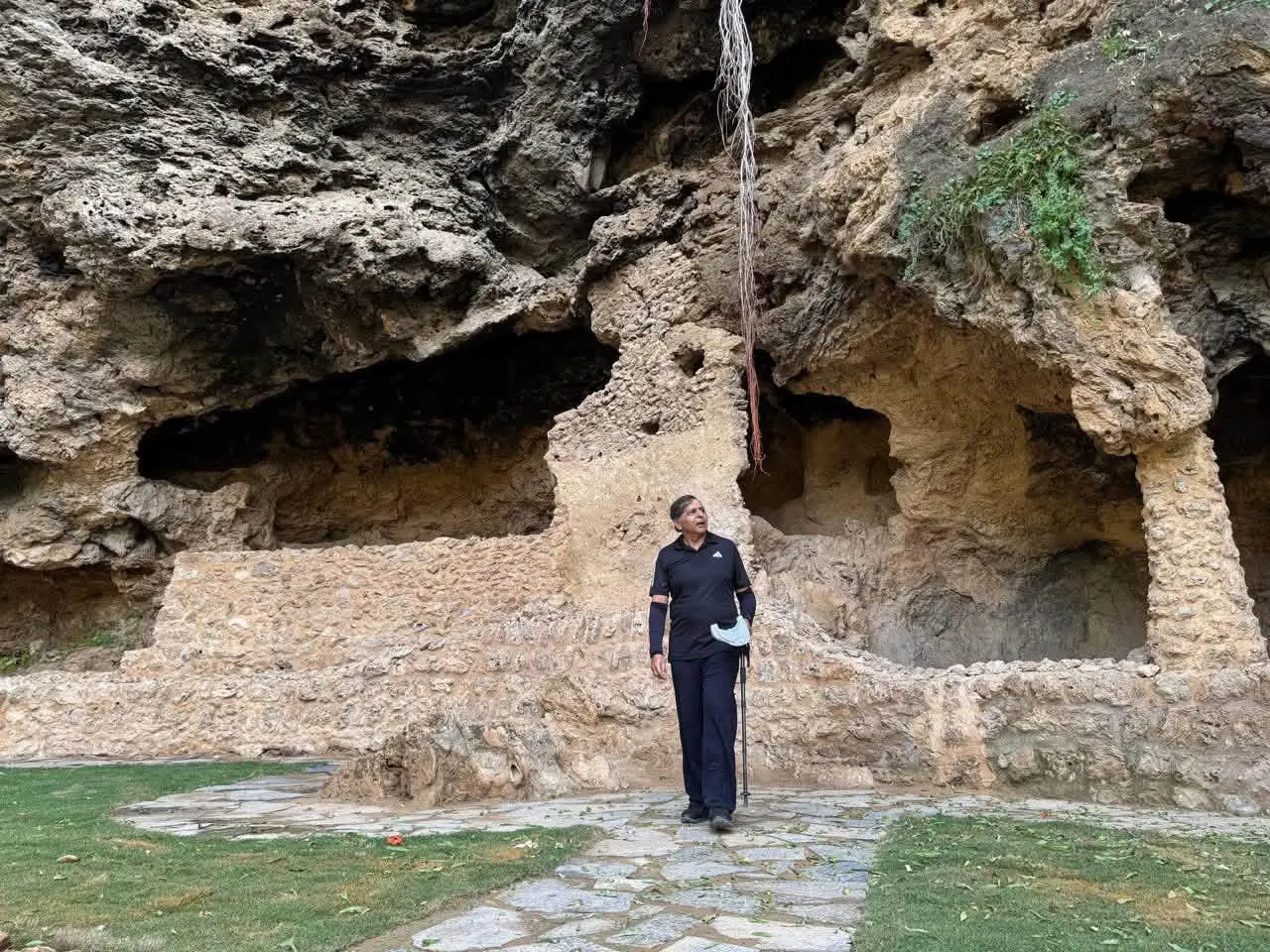
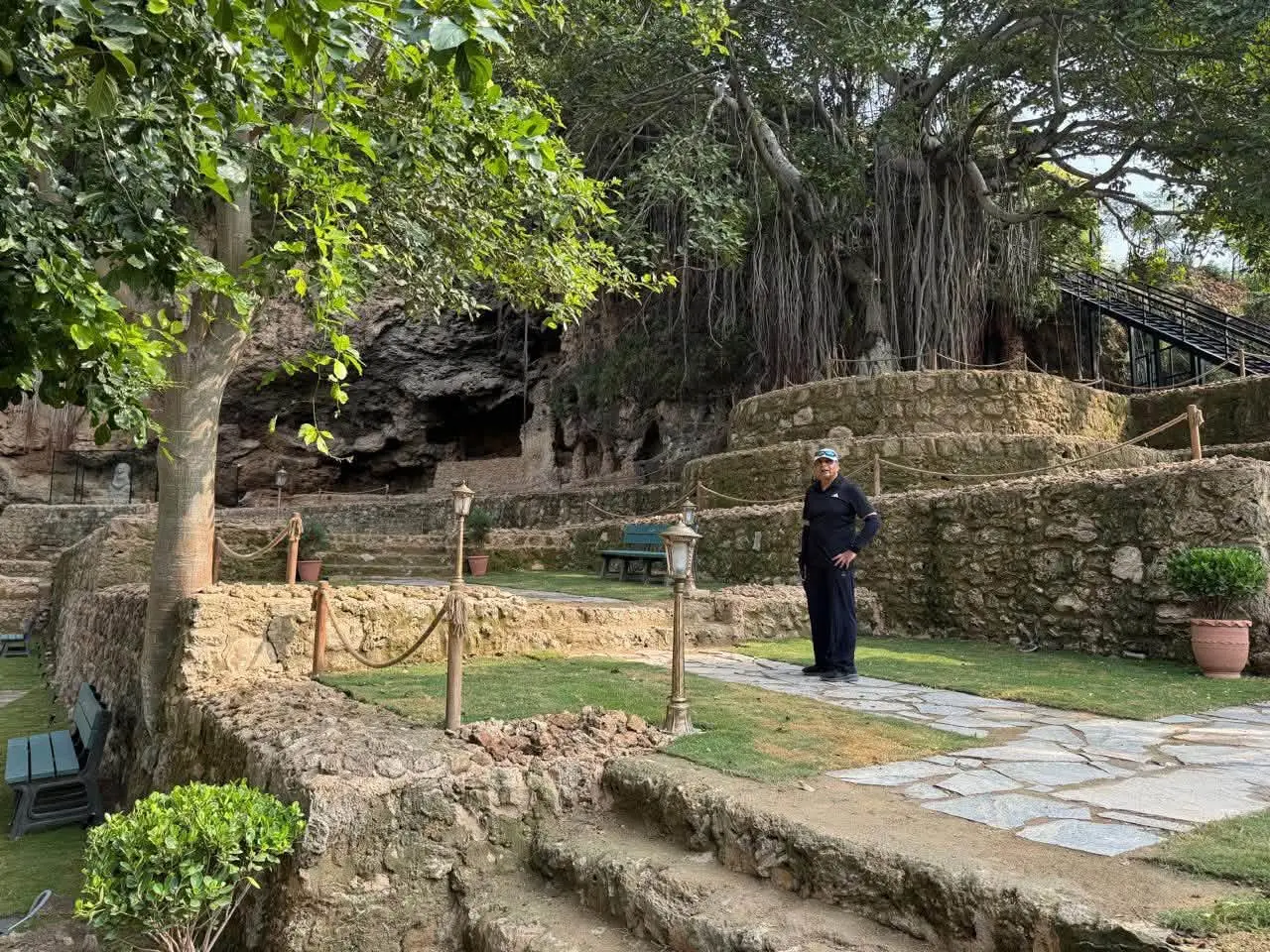
The caves had been beautifully renovated by the Department of Archaeology and Museums (DOAM). Everything looked neat and impressive. They had served as a centre of worship and enlightenment from the first century BCE. It was also amazing to see the banyan tree spreading over the caves, its roots providing ample shelter.
In later years, the caves were also used by yogis and saints. The place reminded me of the Batu Caves in Malaysia, where hundreds of visitors flock to explore. I also noticed that a few sculptures had been placed behind glass, adding to the Buddhist character of the site.
I could only wish that the area would remain as clean as it was at the time of its inauguration, especially as unattractive infrastructure is emerging around it.
We had completed our visit, but our car had yet to arrive. We decided to walk along the road towards Shah Allah Ditta.
After walking three kilometres, we entered the village. As I passed through, I saw a boy selling knives on a motorcycle. I stopped him and learnt that he was from Batgram. I selected a small kitchen knife, but it was the interesting mechanism on his motorcycle that had made me curious.
He parked his motorcycle, attached a wire to his millstone and sharpened the knife for us. The entire process took five minutes.
As we walked further, our car finally met us. We returned to Taxila to drop off our guide and completed the entire trip in four hours.
Amazingly, Taxila and Islamabad are so close: one is the capital of today, while the other was a capital in history.